Aureum Physio

Hip & Knee Pain in Cary

Stairs. Getting out of the car. The first ten minutes of anything. If your hip or knee has started setting the rules, an evaluation is how you find out what is actually behind it.

01What Causes It

What causes hip and knee pain?

It aches on the stairs. It stiffens up after you sit. Some nights the hip keeps you awake and no position helps for long. Your hips and knees absorb impact all day, and they only manage it well when the muscles around them are strong and balanced. When strength or motion goes missing, the joint takes the load instead. An in-depth evaluation is what tells us which joint, which muscle, and which movement started it.
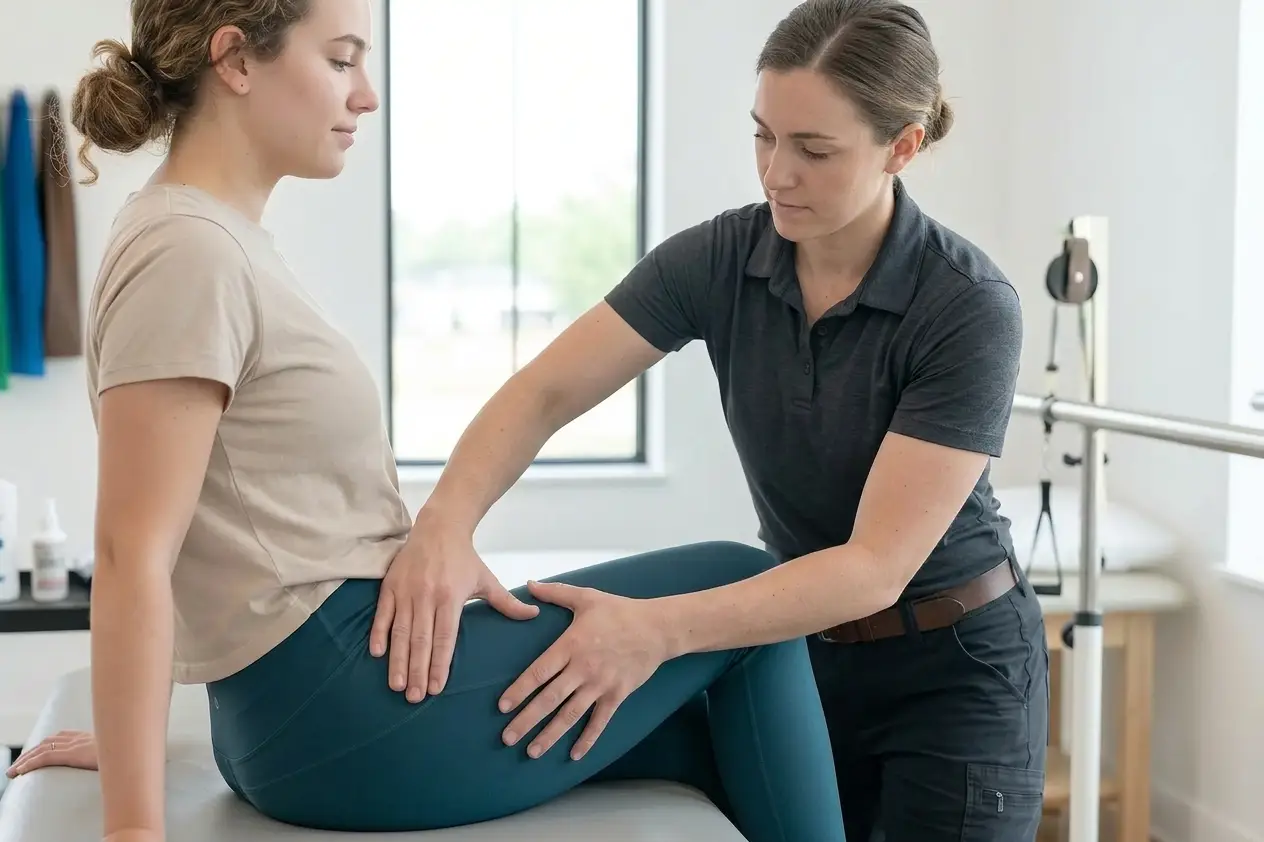
Physical therapist assessing a seated patient's hip

Your hip and knee are only as well aligned as the muscles holding them there. When some muscles are weak and others are tight, the joint sits and tracks slightly off, and every step loads it in a way it was not built for. Nothing about that is dramatic on any single day. Over months it becomes a joint that hurts on stairs and stiffens the moment you sit down.

Even a small difference between your legs changes how force is shared. One knee and one side of the pelvis absorb more than their half, every step, all day. You never feel the difference itself, only the side that keeps complaining about it. This is one of the things a movement and gait assessment is looking for, because the answer is usually strength and mechanics rather than resignation.

Running, jumping and heavy lifting all wear on the protective tissues of the hip and knee. That is normal, and the tissue adapts, as long as there is enough recovery between the loads. Without it, the strain accumulates and turns into pain that shows up on the first step instead of the last mile. The answer is rarely to stop. It is to load and recover in the right proportion.

Years of movement thin the cushioning inside the joint, and bone spurs and ligament changes restrict the motion further. What the imaging shows and what you can do are two different things. Strong muscles around an arthritic joint protect it and keep it moving smoothly, which is why strengthening and mobility work often bring real relief even when the scan looks unimpressive.

Your hip and knee share muscles and nerve supply. If one is stiff or weak, the other compensates, and the compensation is what hurts. It is common for the painful joint to be the one taking the extra work rather than the one that started the problem. That is exactly why the evaluation looks at the whole leg instead of the spot you point to.

The sciatic nerve travels from your lower spine through the hip and down the leg. Joint dysfunction and tight muscles around the hip can compress or irritate it, and the pain then appears well below where the problem actually is. Hands-on work relieves that pressure, but the first job is telling nerve pain apart from joint pain, because the two plans are not the same.


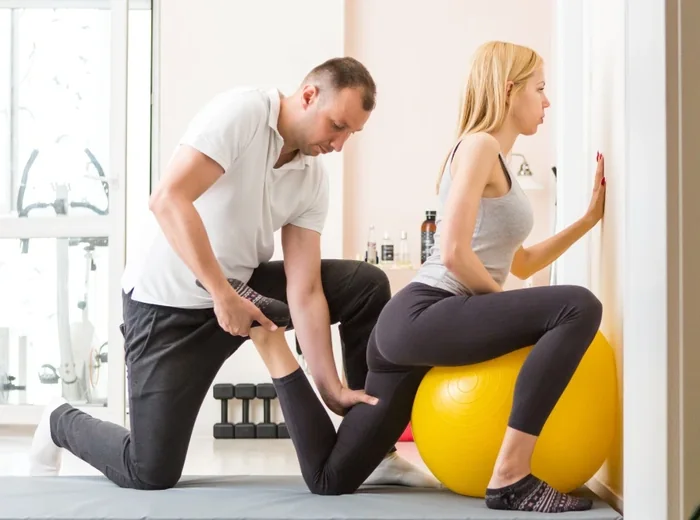
Therapist guiding a patient's leg over an exercise ball
02How PT Helps

How physical therapy in Cary helps.

Waiting is the expensive option with a hip or a knee. Pain that goes untreated keeps changing how you move, and the compensations spread. If you have had swelling or lost motion after a fall, or the pain has held on for weeks despite rest, that is the point to be evaluated. North Carolina has unrestricted direct access to physical therapy, so no physician referral is needed to book. You see Dr. Heather Smith, PT, DPT, OCS, a board-certified orthopedic clinical specialist with 11 years of practice in Cary and the Research Triangle, one on one for the full 30 to 60 minute session. Then four phases. Pain: joint mobilization and hands-on work to settle stiffness and quiet the pain patterns travelling down the leg. Prime: restore hip and knee motion and retrain the walking mechanics that keep reloading it. Perform: strength training that corrects the imbalance and stabilizes the joint under real demand. Prevent: the warm-ups, mobility and progressions that keep the joint protected. Most patients come 2 to 3 times a week for 4 to 6 weeks. Insurance is verified before treatment begins, so you know what visits will cost up front.

03What To Expect

What to expect from your recovery.

01

Assessment

Heather tests strength, flexibility and stability through the whole leg, then watches you walk, squat and climb. The point is to separate the joint that hurts from the joint that caused it. You finish the visit with the mechanism explained and a realistic timeline rather than a guess.

02

Joint work and mobility

Manual therapy and joint mobilization reduce stiffness in the hip, knee and ankle, and targeted pressure releases the muscle patterns referring pain down the leg. As the joint moves better, the guarding and the limp settle, which is what makes real strengthening possible.

03

Strength, gait and protection

Then we build. Strength work for the glutes, hip stabilizers and thigh corrects the imbalance, and gait retraining restores a normal walking pattern. We progress it until the joint holds up under stairs, hills, sport or a full day on your feet, and you know how to keep it there.

In Their Words
Heather was instrumental in helping me recover from both a serious knee injury and other minor muscular discomforts.
Cassie O. · Knee · Google review
Related Conditions

Pain rarely travels alone.

Request an Appointment

Ready when you are.

HoursMon & Wed: 11:00am - 7:00pm | Tue & Thu: 7:40am - 5:00pm | Fri: 7:40am - 2:00pm | Sat-Sun: Closed
Walk-insCall ahead
Book your evaluation. No referral needed in North Carolina.
Step 1 of 5
First things first. What's your name?
We'll need a name to book you in.
Best number to reach you?
A phone number lets us confirm same-day.
And your email?
We'll send your confirmation here.
What questions do you have about your hip or knee?
A few words is all we need.
Look right? Send it.
✓
Request received.

We'll call within business hours to lock in your time.

Book Now · No Referral Needed