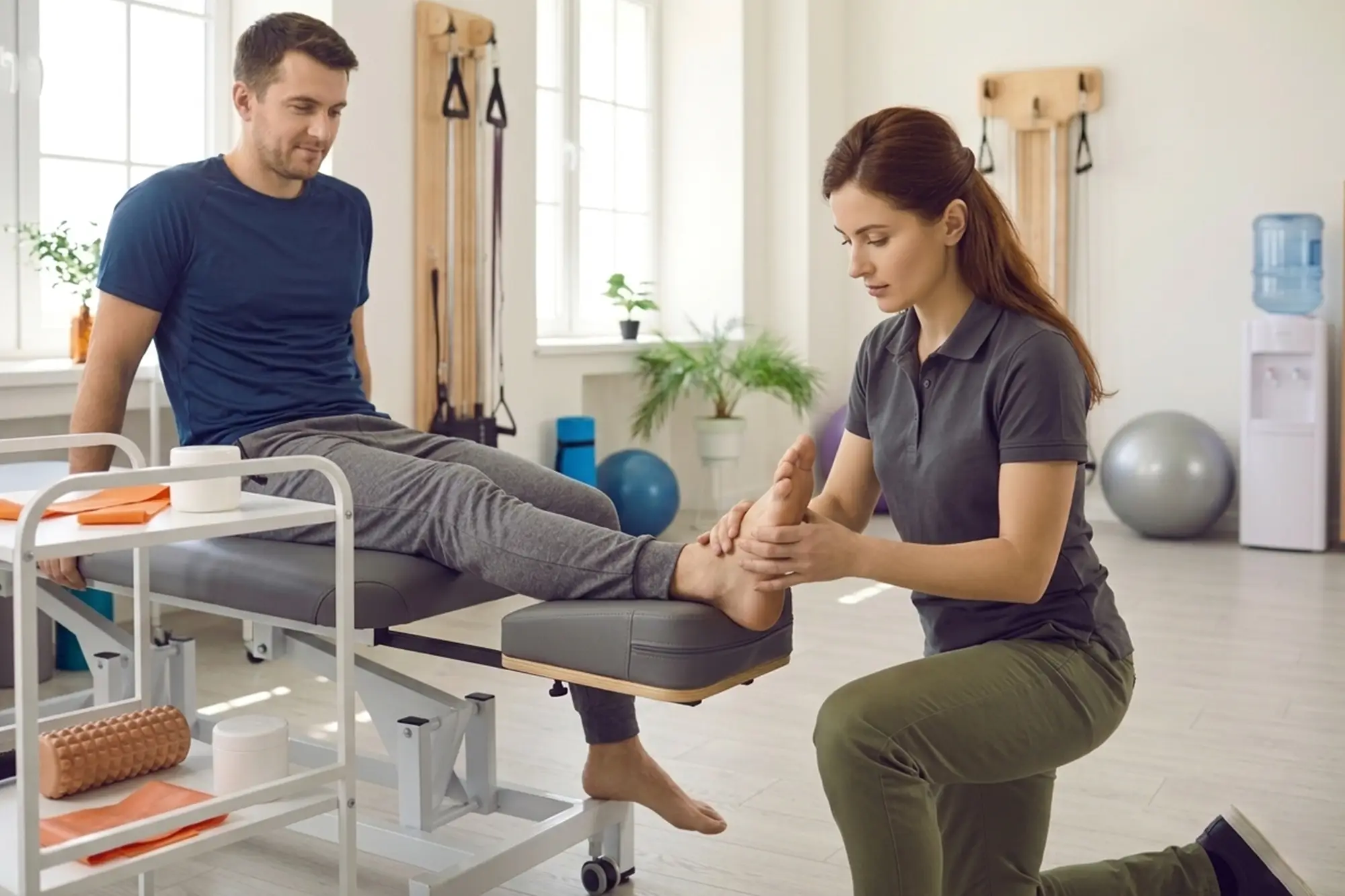
Skilled hands-on treatment for the joint that stops short and the muscle that will not let go. Same board-certified specialist, every visit.

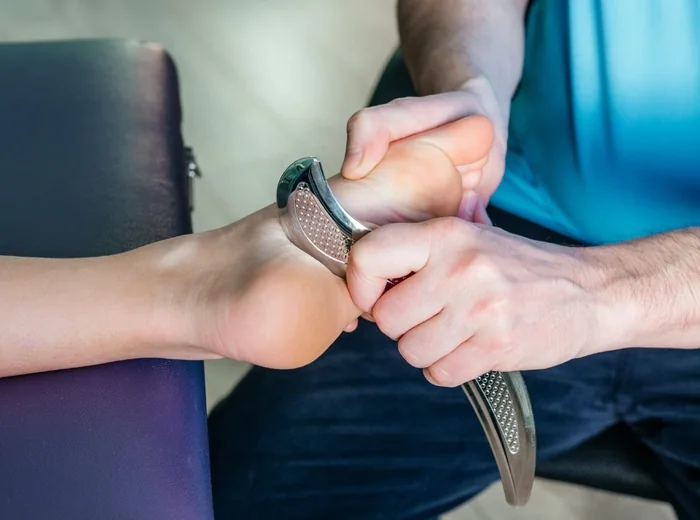
Stiffness is easy to explain away. You slept on it. You sat too long. It will loosen up by the afternoon. Then a month goes by and the shoulder still stops at the same height, the neck still turns further one way than the other, and all the stretching you have been doing has not moved that ceiling an inch. Manual therapy is aimed exactly at that ceiling. It is skilled, hands-on treatment applied directly to restriction in joints, muscle and connective tissue, rather than waiting for the restriction to resolve on its own. It is a clinical technique, not a massage. Massage is largely for relaxation. Manual therapy is chosen and graded to correct a specific mechanical fault that testing has already identified. In practice that means joint mobilization to give back the glide a stiff joint has lost, soft tissue and instrument-assisted work to change tissue that has gone tight and thickened, gentle manual traction to take pressure off an irritated joint or nerve root, and neuromuscular re-education so the motion you just regained gets used properly instead of compensated around.
The other thing hands do is gather information. Your physical therapist can feel how your tissue responds as it is loaded, which is something no questionnaire or imaging report reports back, and it is why the technique changes from visit to visit and sometimes inside a single visit. Stiffness and irritation left alone rarely stay the same size, either: range narrows further, neighboring muscles compensate and start hurting on their own account, and nerve irritation can turn into tingling or numbness. Treating it sooner is simply less work. Three things worth knowing before you book. Your session is 40 minutes, one on one with your Doctor of Physical Therapy, every visit. North Carolina has unrestricted direct access to physical therapy, so no physician referral is needed to be evaluated or treated. Aureum Physio accepts most major insurance plans and verifies your coverage before treatment begins, so you know your costs up front, and most patients come 2 to 3 times a week for 4 to 6 weeks.
If your movement is limited and stretching has not changed it, hands can. These are the three situations manual therapy suits best.
The shoulder stops before overhead. The neck turns most of the way and then quits. The hip will not let you sit cross-legged any more. That is joint mechanics and capsule, not willpower, and mobilization is the tool built for it. The outcome: a bigger range to strengthen into, and you usually feel the difference inside the session rather than months later.
Pain that leaves the place it started and runs down a leg or an arm, sometimes with tingling or a patch of numbness. Reducing the mechanical pressure on the nerve and the muscle guarding built up around it changes how irritable it is. The outcome: a shorter, quieter radiating pattern, and sleep that is not organized around one position.
Acute or chronic back and neck pain from long hours held in one position, where posture has loaded some tissue hard and let other tissue go slack. Hands-on work changes the tissue and re-education keeps the change. The outcome: a full afternoon at a desk that does not cost you the evening afterward.
Every session runs in the same three parts, and you should be able to tell whether it worked before you leave the room.
Your physical therapist asks what you cannot do, then tests it: how far you move on your own, how far they can move you, what happens against resistance, and what the tissue feels like under their hands. You get told what is restricted and why before anything is treated, which is what lets you judge the result honestly afterward.
Mobilization for the joint, soft tissue and instrument-assisted work for the muscle, traction where a joint or nerve root needs the pressure taken off it. It should feel firm and specific, not painful. Every technique is graded to your comfort, your mobility and your medical history, and your therapist checks in and adjusts as they go.
New range that goes unused fades within days, so the last part of every visit is moving through the range you just gained, with cueing, followed by a short home program to hold it. The same tests from the start of the visit get repeated next time, and the plan changes based on what they show.
Wear clothing that moves and gives access to the area being treated. Mild achiness for a day after a session is normal while your tissue adapts to a range it has not had in a while. Sharp pain, new numbness or tingling, or soreness that is getting worse instead of better is not normal, so call the clinic and say so rather than waiting for your next visit.
This is my favorite physical therapy place. Heather is very knowledgeable and cares for the patients’ wellbeing. She provides great advice for home exercise, too

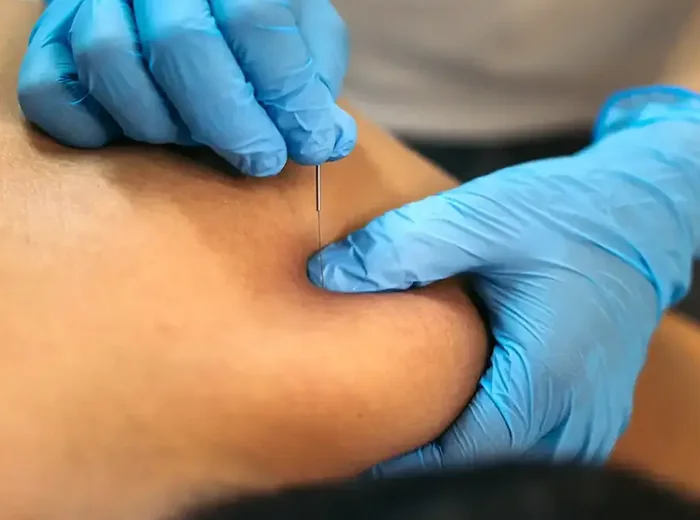
For the muscle hands can reach but cannot release. A needle to the trigger point often unsticks the exact tissue manual therapy has been fighting.

Manual therapy is one technique inside a larger plan. This is the orthopedic evaluation and progression that decides which technique you get.

Maintenance-level tissue work for after your plan ends, when the goal is holding the range you gained rather than winning it back.