One clinician, one-on-one, every visit. Physical therapy in Cary that treats the reason your pain keeps coming back instead of the spot that hurts today.

You were told to rest it. You rested it, and it came back the first week you went back to doing the thing you actually care about. Somewhere in there you started planning around it: which shoe, which side to sleep on, which hill to skip, how far into the walk you can go before you turn around. Physical therapy is the work of undoing all of that. It restores how your body moves, and it does that without leaning on medication or surgery to quiet the signal. Your evaluation starts with your history and everything you have already tried, then moves to how you actually move: posture and gait, joint by joint range, and strength testing that shows where the imbalance sits. That is how the breakdown driving your symptoms gets found instead of guessed at. From there your physical therapist builds the plan, and treatment draws on hands-on manual therapy, instrument-assisted soft tissue work, therapeutic exercise for strength and neuromuscular control, dry needling where a muscle needs it, and plain teaching about posture and load so you know what you are doing and why. The plan moves through four phases, in this order. Pain: calm the tissue and the nervous system down enough to move again. Prime: restore the motion and control the joint lost. Perform: load it, progressively, until it holds under real demand. Prevent: keep the capacity you built so it does not come back.
Then there is the part that should not be a differentiator but is. Your Doctor of Physical Therapy treats you personally, for 40 minutes, every visit, and both of our physical therapists are board-certified orthopedic clinical specialists. Nothing is handed to an aide halfway through and nothing gets lost between visits, because there is nobody to lose it to. North Carolina has unrestricted direct access to physical therapy, so you do not need a physician referral to be evaluated or treated here. Aureum Physio accepts most major insurance plans and verifies your coverage before treatment begins, so you know what your visits cost up front. Most patients come 2 to 3 times a week for 4 to 6 weeks, and many notice a change in the first week or two.

Physical therapy is not only for the badly injured. If pain or stiffness has quietly rearranged your week, an evaluation is worth the visit. Three situations bring most people here.
The joint replacement went well, the fracture healed, and now you are alone with a limb that will not hold you the way it used to. Post-surgical and orthopedic rehab restores motion first, then load tolerance, in a sequence the healing tissue will accept. The outcome that matters: you finish able to do the thing you had the surgery for.
Osteoarthritis or rheumatoid arthritis has been narrowing what you are willing to attempt. Stairs. Gardening. The back half of a walk. Strengthening the muscle around a stiff, sore joint changes how much load that joint has to absorb on its own. The outcome: more of the day back, without waiting for the pain to give permission.
Disc irritation, chronic tension in the neck and shoulders, a sprain you have re-tweaked three times, or a repetitive-motion ache that arrived through work rather than sport. These recur because the movement pattern underneath them never changed. The outcome: that pattern gets addressed, so flare-ups stop being your normal.
No shared attention, no three patients at once, no visit that felt like a waiting room with equipment in it. Here is how an appointment actually runs.
Your first visit is an evaluation, not a tour. Your physical therapist takes your history and everything you have already tried, screens your posture and gait, and tests strength and flexibility side to side to locate the imbalance. You leave knowing what is wrong, what the plan is, and a realistic timeline rather than a guess.
Every visit after that is 40 minutes with the same therapist. Manual therapy and instrument-assisted soft tissue work open up what is restricted, and then you load the movement while the range is available. Each technique has a reason behind it, and you get told the reason, not just the instruction.
You leave with a short home program, deliberately small enough that you will actually do it, because the work between visits is what makes the gains hold. The plan gets re-tested and revised as you progress, and discharge comes when you can go about your own life without thinking about it.
Wear clothes you can move in and give yourself a few extra minutes on the first visit for paperwork. Bring your insurance card and photo ID. If you have imaging reports or notes from a surgeon, bring those too, because they save time we would rather spend treating you.
I've been to a number of physical therapists over the years, but the last couple of times I needed PT I was lucky enough to work with Heather.

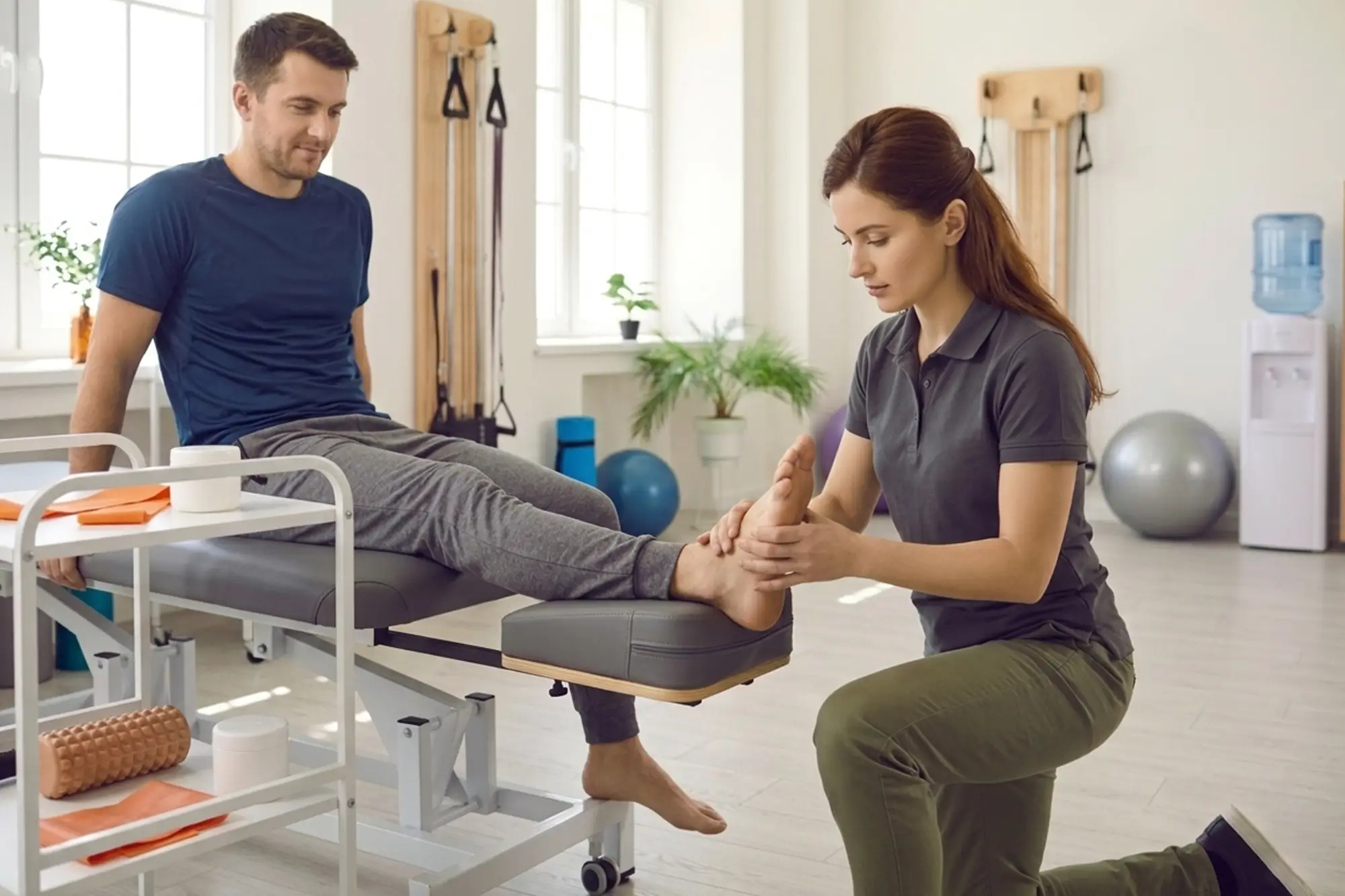
The hands-on half of most plans here. When a joint or a muscle will not move, this is the work that opens it up before you load it.

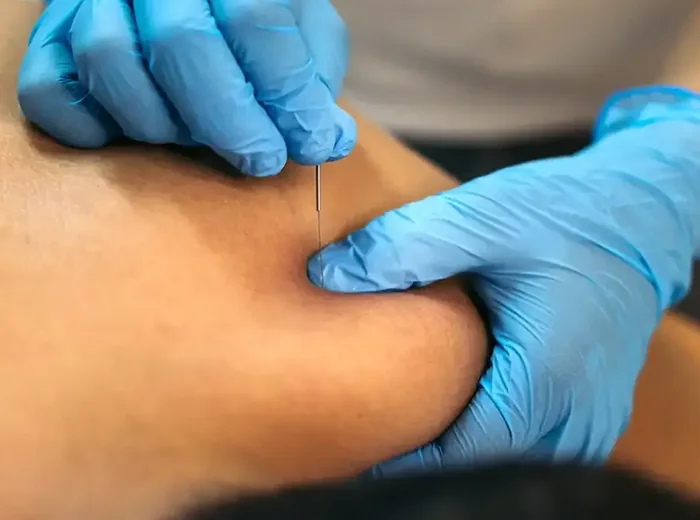
One of the tools inside a plan. When a muscle stays locked no matter how much you stretch it, a needle to the trigger point breaks the cycle so the rest of the plan can work.

Most of what walks in here is orthopedic. This is what OCS board certification in that specialty actually changes about your evaluation and your plan.