Aureum Physio

Running Rehab & Injuries in Cary

You took two weeks off. It felt fine. It came back on the third run. Rest is not a plan, and the reason the pain keeps returning is still there waiting for you.

01What Causes It

What causes running injuries?

You know the pattern by now. It hurts at a certain distance, you back off, it quiets down, and it comes back the week you start building again. Running injuries are almost always overuse injuries, and overuse has specific causes: mileage that climbed faster than your tissue could adapt, a stride that sends load somewhere it does not belong, shoes that stopped supporting you, weakness or imbalance that shows up only when you are tired, and intensity that jumped without warning. Find the one that applies to you and the injury stops being mysterious.

Physical therapist reviewing a runner's treadmill gait analysis on a tablet

Pain around or under the kneecap, worst on downhills and on stairs the next day. The kneecap is not tracking the way it should, usually because the muscles that steer it are imbalanced or the hip is not controlling the leg well at footstrike. This is the most common running complaint there is, and it responds well to strength work once the source of the tracking problem is identified rather than guessed at.

Aching or sharp pain along the shinbone, often after a jump in mileage or a switch to harder surfaces. The impact your stride generates has outpaced what the tissue along the shin can absorb. Backing off helps briefly, but the pain returns at the same point in your build unless the mechanics generating that impact change. Treatment looks at how you strike the ground and what is failing to absorb it.

Stiffness and pain at the back of the heel that is worst in the first few steps of the morning and again at the start of a run. The tendon has been loaded more often than it has been allowed to recover. Tendons do not respond to rest the way muscles do, they respond to loading that is graded carefully, which is why an Achilles that is only ever rested tends to become a long-running problem.

Heel pain that stabs when you first stand up and eases as you move. Stress on the plantar fascia is usually tied to tight calves or footwear that has stopped supporting you, and the two often compound each other. Treatment addresses the calf and ankle, how your foot loads the ground, and what has changed in your shoes, rather than only treating the sore spot on the heel.

Small cracks in bone from repetitive impact without enough recovery. The pain is usually pinpoint rather than diffuse, it gets worse as a run goes on instead of warming up, and it can be sore to press on. This one needs a proper evaluation early, because continuing to train through it makes it worse. If imaging or a physician's input is needed, we will tell you plainly.

Pain on the outside of the knee, often arriving at a predictable distance and then forcing you to stop. Friction between the iliotibial band and the femur is the mechanism, but the reason it is happening is usually further up: hip control that fades as you fatigue. Rolling the outside of your thigh feels productive and rarely fixes it. Building hip strength and adjusting your stride does.
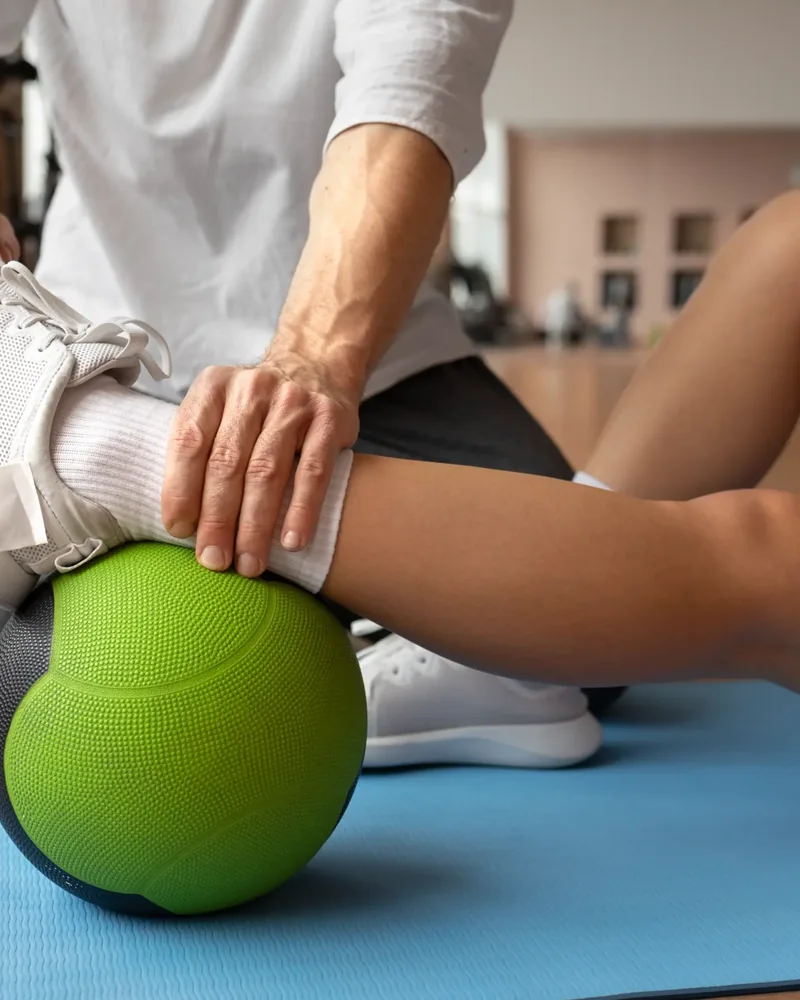
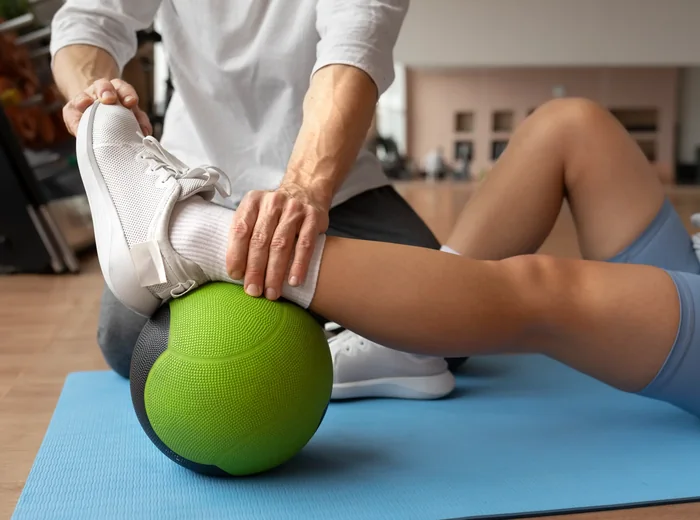
Therapist guiding a patient's knee through controlled range on an exercise ball
02How PT Helps

How physical therapy in Cary helps.

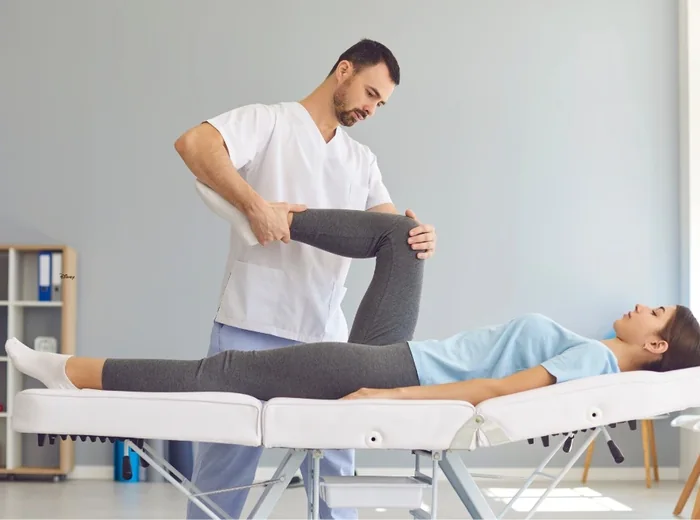
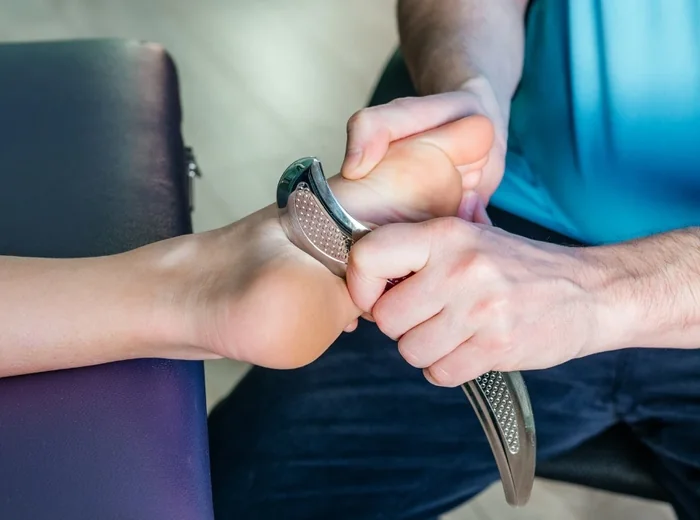
Running rehab here starts with a full evaluation of your symptoms, your movement, and your actual running mechanics, including video gait analysis to see the compensations you cannot feel. From there the plan follows four phases. Pain: hands-on treatment and joint and soft tissue mobilization to settle the irritated tissue and get you moving without medication. Prime: restore the range of motion and control the injury cost you. Perform: targeted strength work for the muscles that were not holding up, plus gait retraining on stride and footstrike so the load stops landing in the wrong place. Prevent: a structured return-to-running progression that rebuilds mileage and intensity on purpose, with load managed so you do not repeat the cycle. Your Doctor of Physical Therapy is a board-certified orthopedic clinical specialist who treats you personally every visit, which matters in running rehab because progress depends on somebody remembering exactly what your stride looked like at your last visit. You do not need a referral: North Carolina has unrestricted direct access to physical therapy. Aureum Physio accepts most major insurance plans and verifies your coverage before treatment begins.

03What To Expect

What to expect from your recovery.

01

Evaluation and gait analysis

Your first visit is 40 minutes, one on one, and it covers your symptoms, your training history, your strength, and video of you actually running. You leave knowing which tissue is irritated, what in your mechanics is irritating it, and whether you can keep running while it settles.

02

Settle it, then rebuild it

Most runners come 2 to 3 times a week for 4 to 6 weeks, and many notice a change in the first week or two. Early sessions use hands-on work to reduce pain and restore motion. Then the strength work begins on whatever was not holding up, usually higher up the chain than where it hurts.

03

Return to running

Coming back is a progression, not a date. Mileage and intensity climb in planned steps while your response is monitored, and stride drills reinforce the mechanics you worked on. You finish knowing how to read your own warning signs and how to build a training block without setting this off again.

In Their Words
It's hard to find a good PT. I'm grateful I found Heather to help me get stronger and on the path to pain free running.
Jason S. · Return to running · Google review
Related Conditions

Pain rarely travels alone.

Request an Appointment

Ready when you are.

HoursMon & Wed: 11:00am - 7:00pm | Tue & Thu: 7:40am - 5:00pm | Fri: 7:40am - 2:00pm | Sat-Sun: Closed
Walk-insCall ahead
Book your evaluation. No referral needed in North Carolina.
Step 1 of 5
First things first. What's your name?
We'll need a name to book you in.
Best number to reach you?
A phone number lets us confirm same-day.
And your email?
We'll send your confirmation here.
What questions do you have about your running injury?
A few words is all we need.
Look right? Send it.
✓
Request received.

We'll call within business hours to lock in your time.

Book Now · No Referral Needed