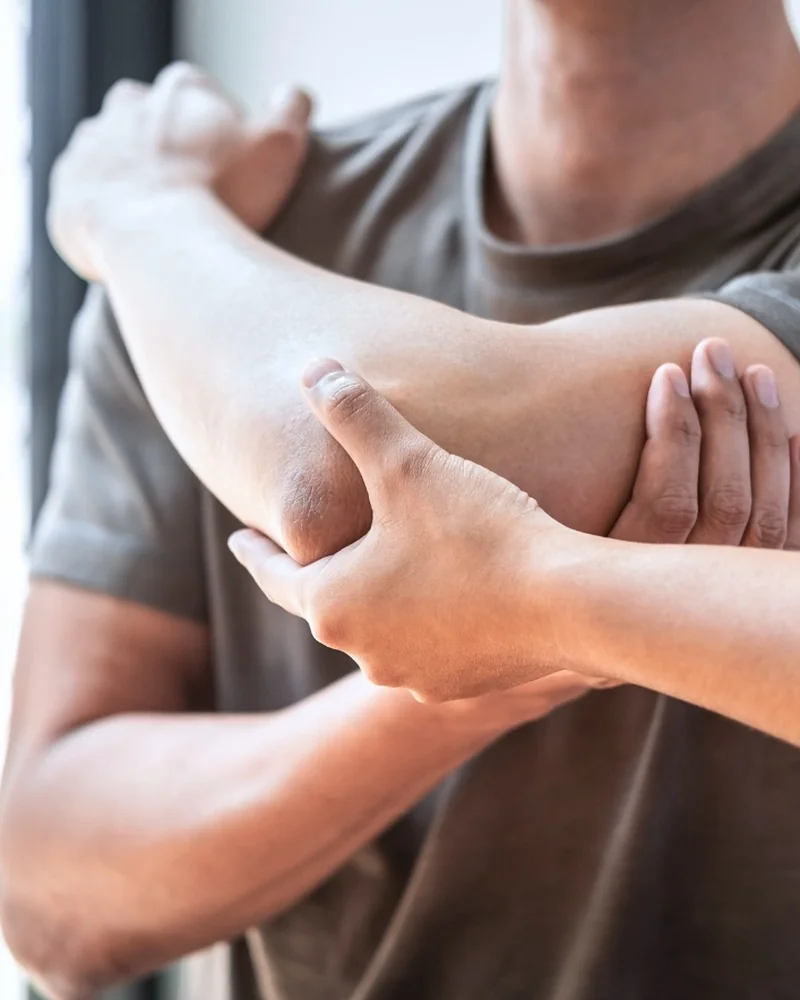
What causes elbow, wrist, and hand pain?
You have started opening doors with the other hand. You shake your fingers out at night. Typing is fine for an hour and then it is not. Your elbow, wrist and hand run through thousands of small repetitions a day, which makes them easy to overload and slow to get a break. Pain here is almost always a story about repetition, position, or a nerve that has run out of room, and which one you have is what decides the plan.
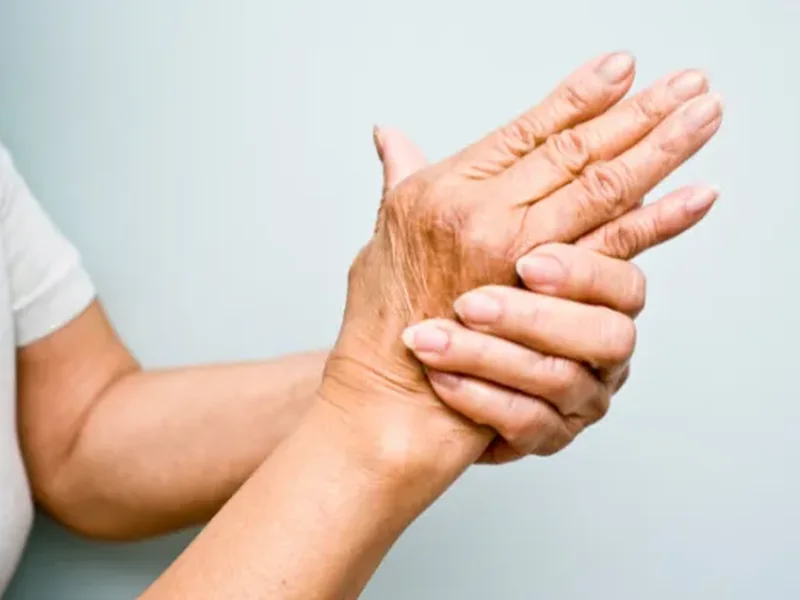
Gripping, lifting and twisting, repeated a few thousand times a day, inflames the tendons and joints doing the work. It rarely arrives as one dramatic moment. It arrives as an elbow or wrist that is sore after work, then sore during work, then sore before you have started. This is the mechanism behind most elbow pain, and it responds well once the load is managed and the motion is retrained.
Where your wrist sits while you type, lift or train decides how much stress travels through the small joints and tendons of the hand. An awkward angle held for hours irritates tissue quietly, and the irritation outlasts the workday. Changing the setup and the way you hold a load is not a minor tweak. On this part of the body it is often the single biggest change we make.
Nerves have to pass through tight tunnels of soft tissue and bone to reach your hand. When swelling, repetition or stiffness narrows one of those tunnels, the nerve gets squeezed, and you feel numbness, pins and needles, or a hand that fumbles what it used to hold easily. Screening for nerve involvement and circulation is part of the evaluation, because nerve pain needs a different plan than tendon pain.
A fall onto an outstretched hand, an impact, or a sudden force can sprain a ligament, damage a nerve, or fracture a small bone. Some of these need imaging first, and if yours does, you will be told rather than treated around it. Once the tissue is safe to load, rehabilitation restores the motion and strength the injury took, which is the step most people skip.
Chronic inflammation in the joints of the wrist and hand brings stiffness, swelling and less movement than you had a year ago. Joints that hurt get used less, and joints that get used less stiffen further. That loop is the real problem. Gentle movement, hands-on work and strengthening keep these small joints tolerant, which is why arthritis is a reason to start rather than a reason to wait.
Left alone, a persistent elbow, wrist or hand problem tends to cost you grip. You notice it on a jar lid, a heavy bag, a barbell. Tendons that stay irritated for months degenerate instead of healing, and the muscles that drive your grip weaken from months of avoiding the pain. Rebuilding forearm and grip strength is what turns a managed problem into a resolved one.