Every year around Thanksgiving, millions of people spend hours in a car, on a plane, or in an airport. They arrive tired, stiff, and a little achy, and most of them assume that's just the price of getting home for the holidays.
Some of it is. But the stiffness and pain that follow long travel days aren't random. They have specific causes, and understanding them makes it much easier to arrive in better shape and to know when the aches mean something more.
Why Sitting for Hours Hurts
Your body is built to move. Tissues like discs, joints, and muscles depend on regular movement to stay healthy, and prolonged sitting takes that movement away.
Your spinal discs are loaded in one position. Sitting, especially in a slumped posture, loads the lumbar discs differently than standing or walking does. Discs rely on changes in pressure and position to move fluid in and out. After hours in a fixed position, they can feel stiff and irritable, which is why many people feel a sharp "catch" in the low back when they finally stand up.
Your hip flexors and glutes get a long, quiet shift. With the hips bent for hours, the muscles at the front of the hip sit in a shortened position while the glutes are essentially switched off. That's why people often feel tight in the front of the hips and weak or achy in the back of them after a long drive.
Your muscles fatigue in static positions. Holding any posture, even a comfortable one, requires low-level muscle effort. Over hours, the muscles of the neck, upper back, and low back tire out and start to ache. Driving adds to this because the shoulders and neck stay braced, and flying adds cramped seats and overhead bag lifting.
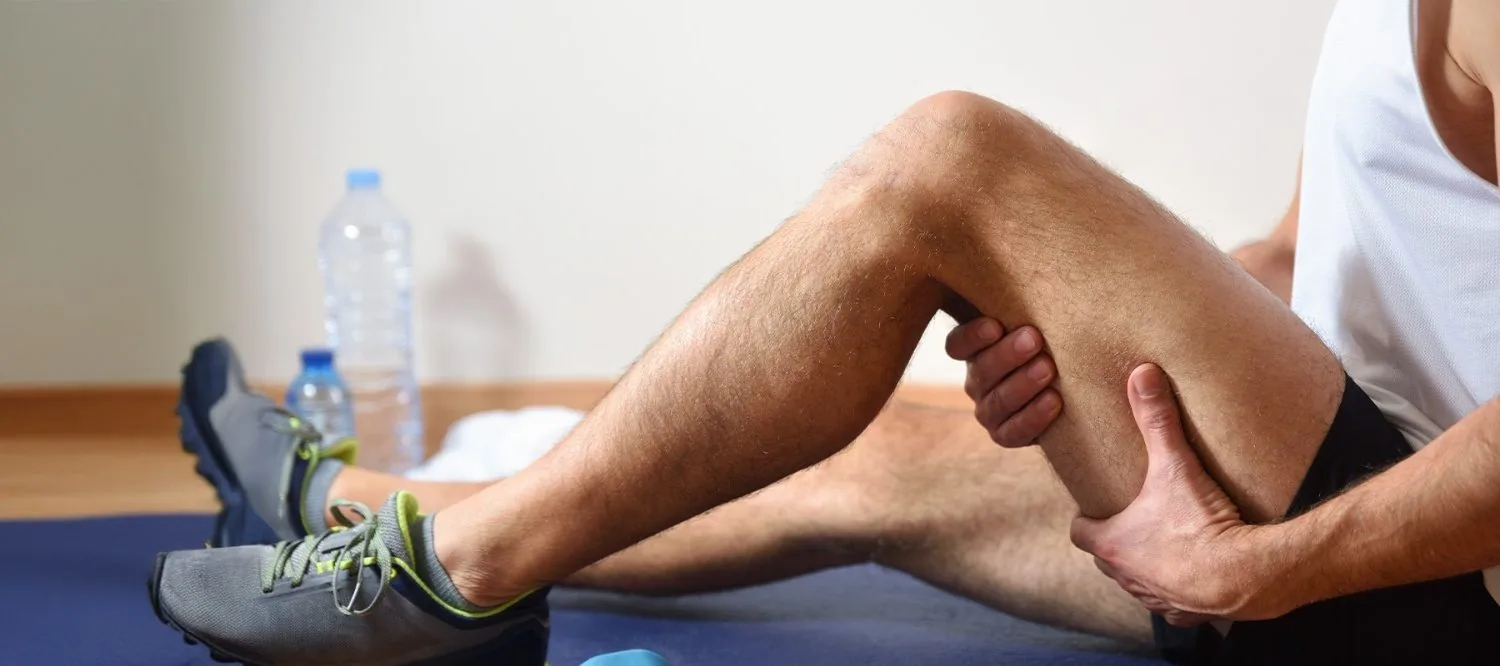
Circulation slows. Calf muscles act as a pump that helps return blood from the legs. When they're still for hours, fluid can pool in the lower legs and feet, which is why shoes feel tight and legs feel heavy after a long flight.
The Part Most People Don't Think About: The Luggage
The sitting is only half the story. Travel days often include a few demanding physical moments that come after a long period of stillness: hoisting a heavy bag into an overhead bin, lifting a suitcase out of a trunk, carrying a child or a bag through an airport.
Lifting load immediately after hours of sitting, when the back is stiff and cold, is one of the more reliable ways to strain a back or irritate a shoulder. The tissues haven't been moved or warmed up, and they're being asked to do real work. A lot of "I hurt my back traveling" stories are actually "I lifted something heavy right after sitting for four hours" stories.
Who Is Most Affected
Anyone can feel stiff after a long trip, but some people feel it more:
- People with existing back, hip, or sciatic-type symptoms, which are commonly aggravated by prolonged sitting
- People with desk jobs, who are often already sitting for most of the day and then add a travel day on top
- Older adults, whose tissues generally tolerate prolonged static positions less well
- Anyone recovering from a recent injury or surgery
A Note on Leg Swelling
Most travel stiffness is harmless and resolves quickly once you're moving again. One exception deserves a mention: a blood clot in the leg (deep vein thrombosis) is a recognized risk after long periods of immobility, including long flights and drives.
If you notice swelling, warmth, redness, or pain in one calf, particularly if it comes with shortness of breath or chest pain, that is not a physical therapy problem. It needs prompt medical attention.
What Actually Helps
You don't need a complicated routine. The principle is simple: break up long periods of stillness. Changing position regularly, getting up to walk when you can, and giving your body a few minutes to move before lifting heavy luggage all reduce the load on stiff tissues. Planning stops on a long drive and walking the aisle on a flight are small habits with a real payoff.
What those habits can't do is fix a back or hip that is already struggling. If long sitting reliably flares your symptoms, travel is exposing a problem that was already there. Fixing it means understanding what's driving it, whether that's hip mobility, trunk strength, a sensitive disc, or the way you move when you stand up and load.
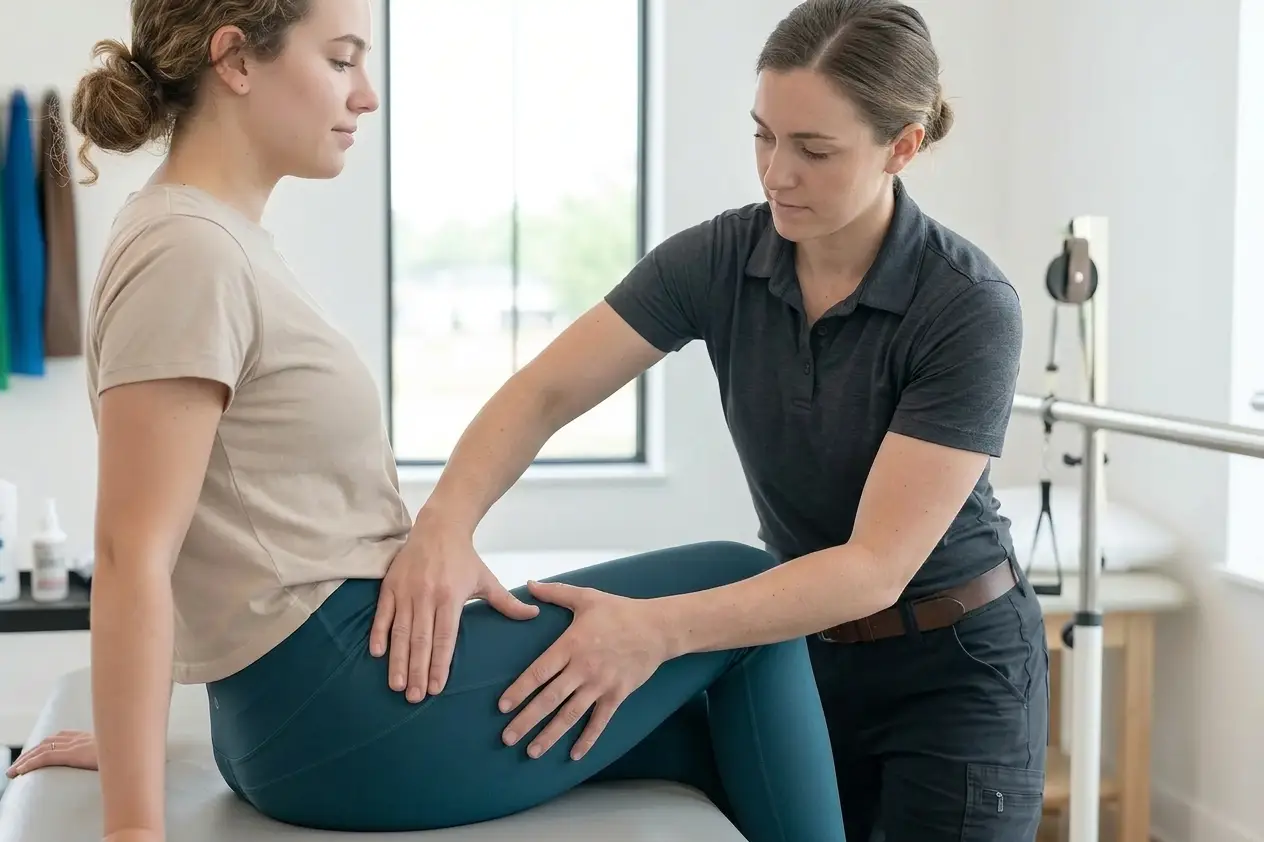
At Aureum Physio, we see this pattern every holiday season: patients whose symptoms only really show up when they sit for a long time. A proper assessment can tell you why, and give you a plan that makes next year's trip a lot more comfortable.
Heading out for the holidays? If long car rides or flights always leave you aching, come in before you travel. It's much easier to get ahead of it than to recover from it.