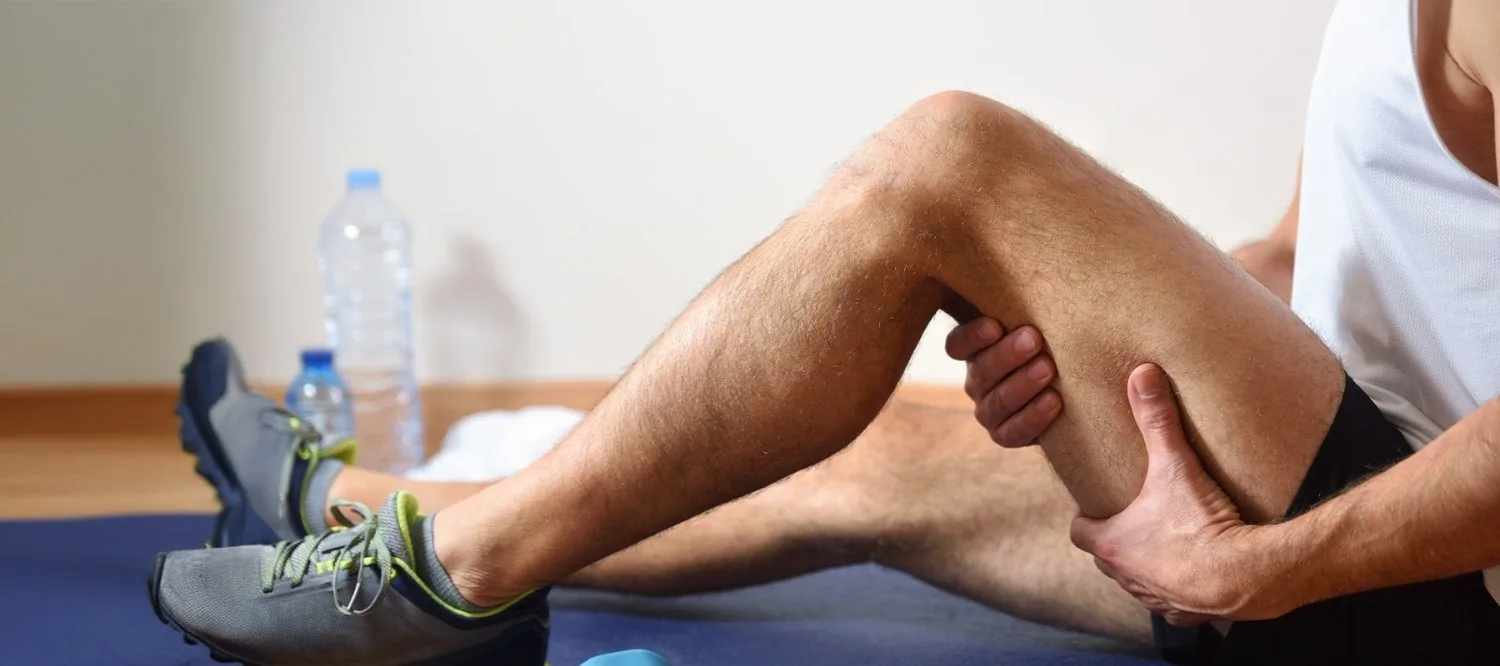
Not all hamstring pain is the same. This sounds obvious, but in practice, it matters enormously – because the two most common causes of hamstring pain are often confused for each other, and treating one like the other tends to make things worse.
The two conditions are a hamstring strain and proximal hamstring tendinopathy. Understanding the difference could save you months of frustrating, ineffective self-treatment.
Hamstring Strain: The Acute Injury
A hamstring strain is a muscle injury, or a tear of the muscle fibers. It usually happens suddenly: a sprint, a lunge, a kick, or a stumble. There’s often an immediate sensation of something “going” in the back of the thigh, followed by sharp pain, swelling, and difficulty walking or straightening the leg.
Strains are graded by severity from Grade 1 (minor fiber disruption, minimal strength loss) to Grade 3 (complete rupture). Most acute hamstring strains in recreational athletes fall in the Grade 1-2 range.
The principle governing acute strain rehab is progressive loading: starting with gentle range of motion work, then gradually introducing load as the tissue heals, pacing increases carefully to avoid re-injury. The hamstring is notoriously prone to re-strain, particularly in the first few months after injury, when scar tissue is present but not yet fully remodeled.
Proximal Hamstring Tendinopathy: The Chronic Condition
Proximal hamstring tendinopathy (PHT) is a very different animal. It’s not a muscle injury; instead, it’s a degenerative change in the tendon that attaches the hamstring to the sitting bone (ischial tuberosity), at the base of the glute.
PHT tends to develop gradually. Runners and cyclists are particularly susceptible, especially those who sit for long periods and also train at high volumes. The typical presentation is:
- Deep aching pain in the sitting bone, often worse after sitting for a while
- Pain at the start of a run that may warm up, then return after stopping
- Discomfort going up hills or stairs
- Sensitivity to forward hip flexion under load; deadlifts, lunges, and stretching the hamstrings often aggravate it
That last point is critical: stretching the hamstring is one of the worst things you can do for proximal hamstring tendinopathy. Tensioning an already irritated tendon at the point of compression increases the load on tissue that needs to be deloaded first. Yet stretching is almost universally what people reach for when they feel hamstring tightness – and it’s frequently recommended without distinguishing between a tendon problem and a muscle problem.
Why the Confusion Happens
Both conditions involve pain in the posterior thigh. Both can feel like “tight hamstrings.” Both can be aggravated by activity. And both are common in active people.
But the mechanisms are different, the locations are different (mid-belly for strain, proximal near the sit bone for tendinopathy), and the treatment approaches are essentially opposite in their early phases.
Getting this distinction wrong – particularly treating PHT like a strain and aggressively stretching and loading early – is one of the main reasons PHT becomes chronic. The tendon doesn’t get a chance to settle down.
Getting the Right Diagnosis Matters
Both conditions eventually require progressive loading as part of rehabilitation – but the timing, the starting point, and the specific loading parameters differ significantly. PHT in particular requires a carefully graduated program that begins with isometric work, progresses to heavy slow resistance, and eventually builds back to the elastic, high-load demands of running and sport.
If you’ve been managing hamstring pain on your own for more than a few weeks without clear improvement – or if you’re not certain which condition you’re dealing with – a proper assessment is worth the investment of time.
At Aureum Physio, differentiating between these two presentations is straightforward with a thorough history and physical examination. The right diagnosis leads to the right plan – and that’s the difference between a few weeks of focused rehab and months of spinning your wheels.
Hamstring pain that isn’t resolving with what you’ve tried is a signal worth listening to. Come in and let us help you understand what’s actually going on – and get you on the right track.