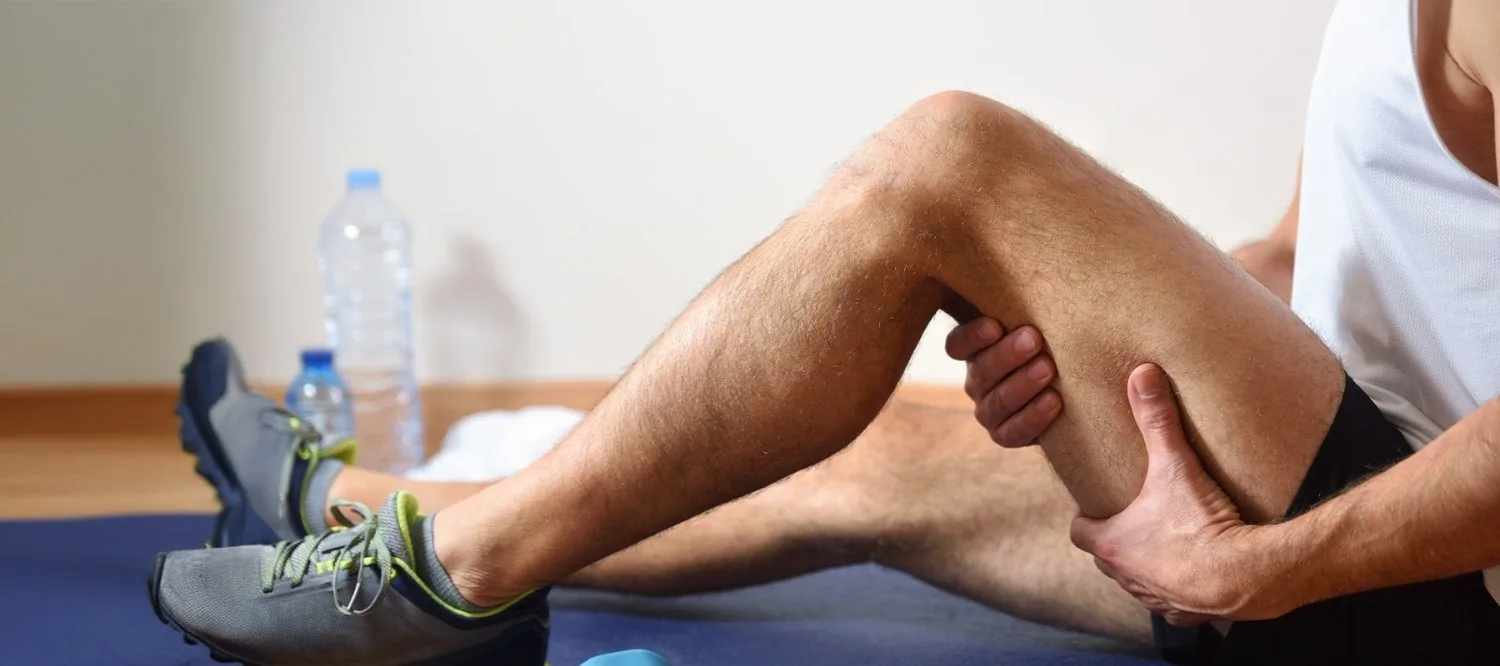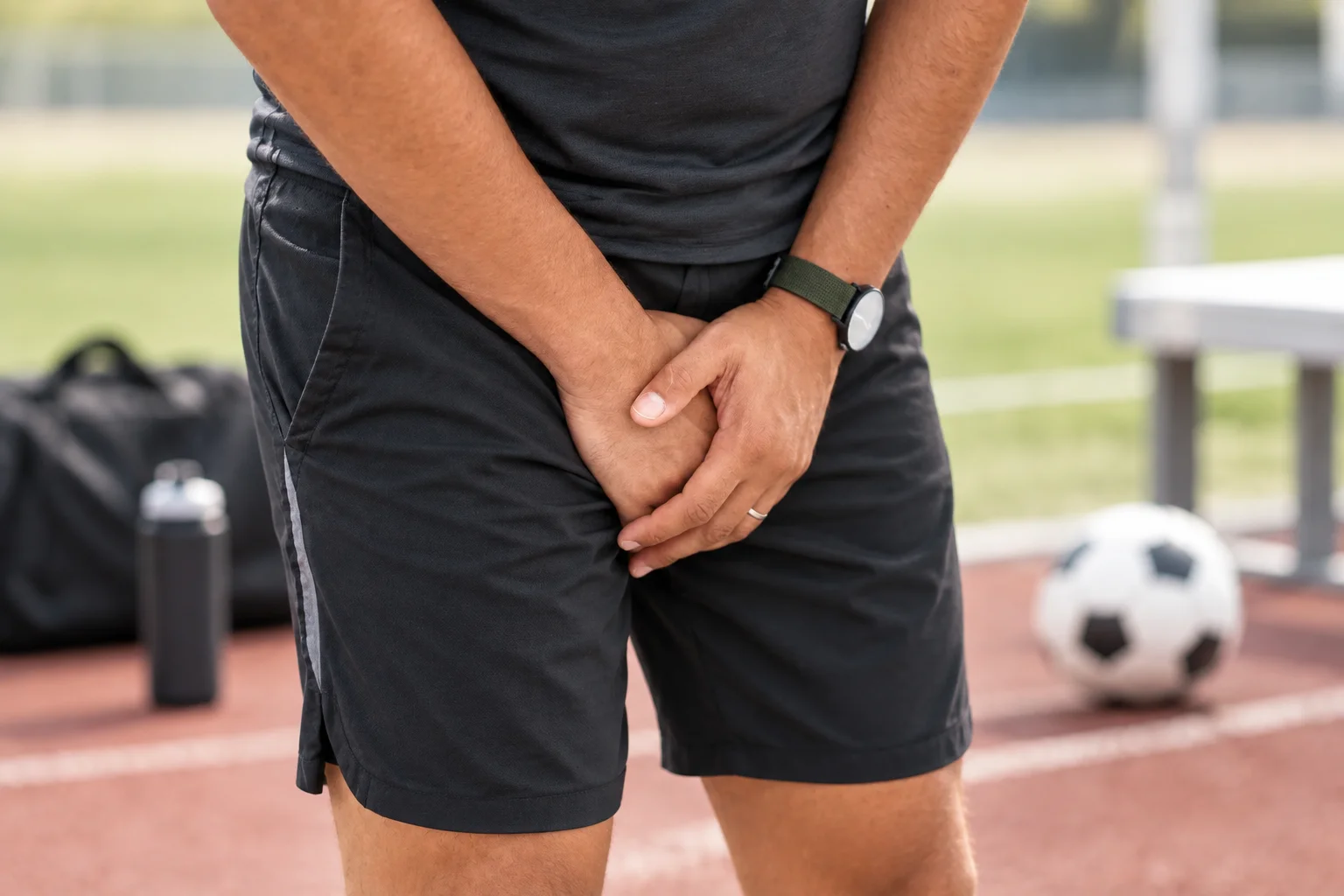
Groin pain in athletes is among the most diagnostically challenging presentations in sports medicine. It’s an area where multiple structures sit in close proximity, where several conditions can produce nearly identical symptoms, and where the wrong diagnosis - or a missed one - leads to months of ineffective treatment.
If you’re an athlete with groin pain that hasn’t fully made sense, understanding the landscape of what it might be is a useful starting point.
The Problem With “Groin Strain”
“Groin strain” is often used as a catch-all label for any pain in the groin region. It’s not wrong exactly, but it’s incomplete - and treating a complex groin injury as a simple adductor muscle strain is one of the most common reasons athletes stay injured for longer than necessary.
The groin region involves the adductor muscles, the hip flexors, the pubic symphysis, the hip joint itself, and several nerves. Pain in this area can originate from any of these structures - and often from more than one simultaneously. The clinical picture is frequently mixed, which is why careful assessment is essential and why generic “groin strain” rehabilitation often fails.
Adductor-Related Groin Pain
Injury to the adductor muscles, or the group of muscles on the inner thigh that pull the leg toward the midline, is the most common cause of acute groin pain in athletes. It typically occurs with rapid change of direction, a sudden lunge, or a forceful kick, and produces immediate pain on the inner thigh near where the adductors attach to the pubic bone.
Adductor strains are graded by severity. Mild to moderate strains respond well to progressive loading rehabilitation, with careful attention to restoring full strength and length before returning to sport. The return-to-sport decision matters enormously, as adductor strains have a high re-injury rate when athletes return before full rehabilitation is complete.
Adductor-related groin pain can also develop gradually through overuse, particularly in athletes with high volumes of running, skating, or kicking. In this presentation, the chronic tendinopathic changes at the adductor origin require a loading-based rehabilitation approach rather than rest.
Athletic Pubalgia
Athletic pubalgia - sometimes called a “sports hernia,” though that term is imprecise and somewhat misleading - refers to a disruption of the posterior wall of the inguinal canal, typically involving the conjoined tendon or the internal oblique aponeurosis. It produces groin pain that is frequently described as a deep, burning ache in the lower abdomen and groin, often worse with explosive movements, sprinting, and cutting, and sometimes radiating to the inner thigh or scrotum.
It’s more common in sports involving high-velocity rotational movements, such as soccer, ice hockey, and American football. It often coexists with adductor pathology, making the clinical picture more complex.
The diagnosis requires clinical expertise and, in many cases, advanced imaging. Management can be conservative or surgical depending on the severity and the athlete’s response to rehabilitation, though cases that fail conservative management often require surgery.
Hip Joint Pathology
The hip joint is immediately adjacent to the groin, and hip pathology frequently produces groin pain rather than lateral hip or buttock pain. This catches many athletes - and many clinicians - off guard.
Hip labral tears, femoroacetabular impingement (FAI), and early hip osteoarthritis can all present primarily as groin pain - a deep, catching ache that may be accompanied by a click or a sense of giving way. The pain is often reproduced by hip flexion combined with rotation, and by prolonged sitting.
Athletes with groin pain that doesn’t clearly point to a muscle injury, that has a deep or hip-joint quality, or that hasn’t responded to soft tissue treatment should have the hip joint specifically assessed. Treating an adductor strain when the real problem is a labral tear is a common and costly diagnostic error.
Nerve Contributions
Several nerves in the groin region can become entrapped or irritated, producing pain, tingling, or hypersensitivity in the groin, inner thigh, or genitalia that mimics or coexists with musculoskeletal pathology. The ilioinguinal nerve, the genitofemoral nerve, and the obturator nerve are all relevant in this area.
Nerve contributions to groin pain are easily overlooked in a musculoskeletal assessment that focuses exclusively on muscles and joints. When pain has a burning, electrical, or hypersensitive quality, or when it doesn’t respond to loading-based rehabilitation as expected, a neural component is worth considering.
Getting the Diagnosis Right
The complexity of groin pain in athletes, as well as the frequency with which multiple structures are involved simultaneously, means that accurate diagnosis requires a thorough assessment from a clinician experienced with this region. A history that includes the mechanism, the quality and location of pain, the activities that provoke it, and the response to previous treatment is as important as the physical examination.
At Aureum Physio, groin pain presentations receive the diagnostic attention they require. In our experience, athletes who have been managing groin pain for months without resolution are often working with an incomplete or inaccurate diagnosis - and getting that right is the first step toward actually getting better.
If you’ve been dealing with groin pain that hasn’t made sense or hasn’t responded to what you’ve tried, come in for a proper assessment. Getting the diagnosis right changes everything about the treatment.