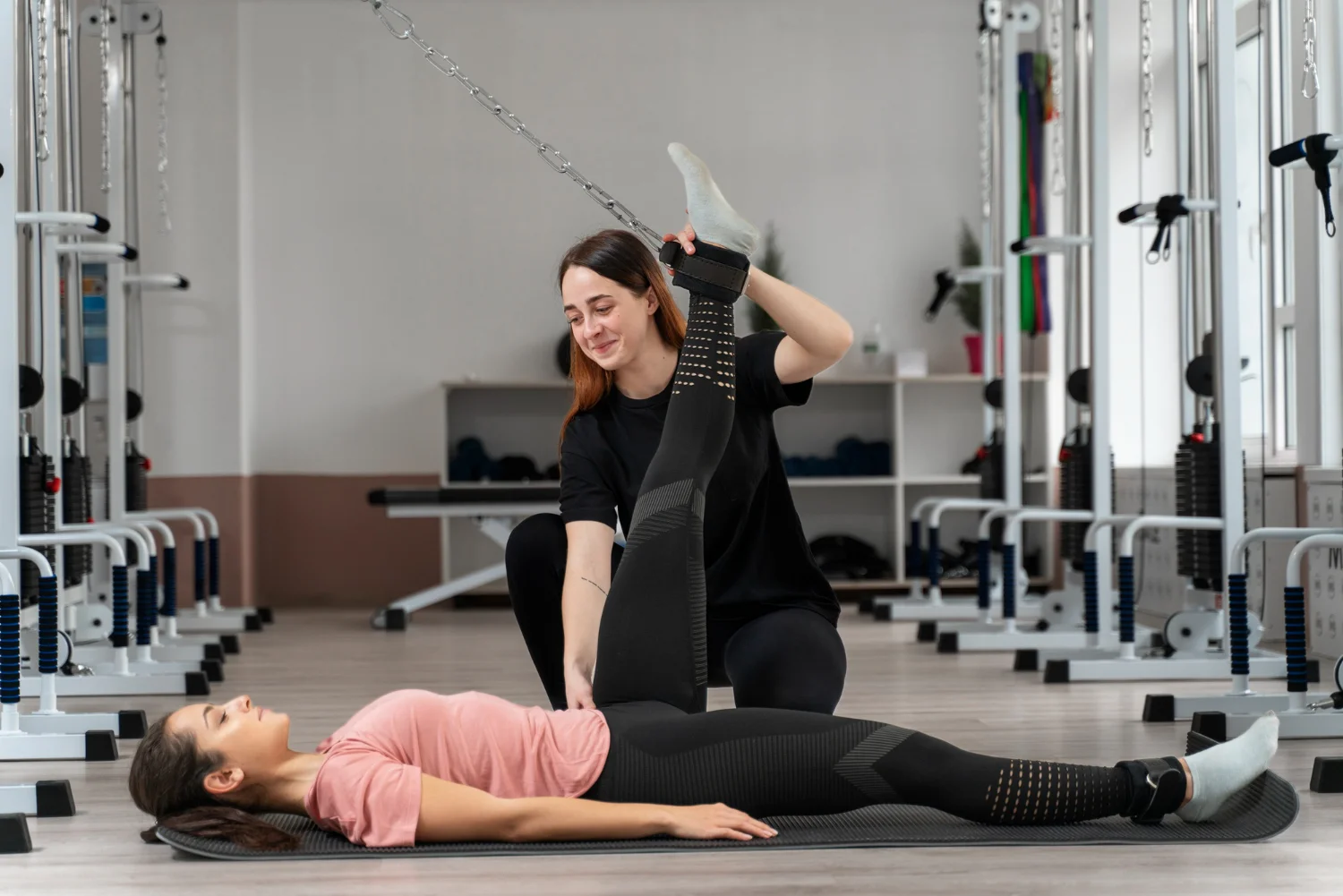
“Prehab” has become a popular word in fitness and sports medicine circles. Like a lot of popular words, it means different things to different people - and the gap between how it’s marketed and what the evidence actually supports is worth understanding.
The short version: prehab works, when it’s done right. But “doing it right” requires more specificity than most generic prehab programs offer.
What Prehab Actually Is
Prehabilitation, or prehab, refers to targeted physical preparation undertaken before a known stressor. That stressor is typically one of two things: a planned surgery, or a high-demand athletic season or event.
The underlying logic is straightforward. You go into a challenge in better physical condition than you would have otherwise, and you come out the other side with better outcomes. It’s the same principle as training for a race rather than showing up on the start line cold.
Where it gets more nuanced is in the specifics - what exactly to do, how much, for how long, and whether the program is actually targeting the right things for the individual.
Pre-Surgical Prehab: What the Research Shows
The evidence for prehab before elective orthopaedic surgery - particularly knee and hip replacements, and ACL reconstruction - is genuinely strong.
Patients who complete structured physical therapy before surgery consistently show better outcomes on the other side: faster return to function, shorter hospital stays in some cases, less post-operative pain, and better strength baselines from which to begin rehabilitation. The reason is straightforward: surgery is a significant physical insult, and a body that enters surgery stronger and with better neuromuscular control recovers from that insult more efficiently.
For ACL reconstruction specifically, pre-operative quadriceps strength is one of the strongest predictors of post-operative outcomes. Patients who go into surgery with better quad function come out with better quad function. Given that quad inhibition after ACL surgery is one of the primary rehabilitation challenges, this head start matters significantly.
The principle extends beyond orthopaedic surgery. Cancer patients undergoing major procedures, cardiac patients, and others have shown improved surgical outcomes with pre-operative conditioning. The body’s capacity to tolerate and recover from physiological stress is trainable, and training it before surgery is a genuinely worthwhile investment.
Pre-Season Prehab: Injury Prevention for Athletes
The second application of prehab - preparing for a high-demand athletic season - has a similarly strong evidence base, though with important caveats.
Several well-studied programs have shown meaningful reductions in injury rates for specific sports. ACL injury prevention programs for football and soccer players, shoulder injury prevention programs for overhead athletes, hamstring injury prevention programs for sprinters - these work, and the research behind them is robust.
The caveat is that these programs are typically designed around the most common injury patterns in a specific sport, not around the specific deficits of an individual athlete. A generic prehab program that isn’t targeted to the individual’s actual movement patterns, strength deficits, and injury history has a lower yield than one that is.
This is where the difference between a program downloaded from the internet and a program designed after a proper movement assessment becomes significant.
What Most Generic Prehab Programs Miss
The limitations of off-the-shelf prehab are worth naming honestly:
They don’t assess what’s actually deficient. A program that prescribes the same exercises to every athlete preparing for the same sport treats all athletes as identical. In practice, one athlete’s limiting factor is hip abductor weakness, another’s is poor single-leg stability, and a third’s is a movement pattern that creates asymmetrical loading. A program that doesn’t identify these individual factors will address some of them by accident and miss others entirely.
They don’t account for baseline fitness. A prehab program appropriate for a recreational runner with no training background looks very different from one appropriate for a competitive masters athlete. Starting load, progression rate, and exercise selection all need to be calibrated to the individual.
They stop too early. Prehab is most effective when it runs long enough to produce genuine neuromuscular and structural adaptation - typically at minimum six to eight weeks before the stressor. Programs that are rushed in the final two weeks before surgery or the start of a season produce limited results.
What Good Prehab Actually Involves
Effective prehab starts with an honest assessment of where the individual currently is and where they need to be. For pre-surgical patients, that means understanding the current strength and function levels relative to what post-operative rehabilitation will demand. For athletes, it means identifying the movement patterns and physical qualities most relevant to their sport and most likely to be implicated in injury.
From that assessment, a program is built around actual deficits - not a generic checklist. It’s progressive, starting at an appropriate level and building toward the demands of the surgery or season ahead. And it runs long enough to produce real change.
At Aureum Physio, prehab assessments are one of the things we do that produce some of the clearest returns for patients. Whether you’re preparing for a planned surgery or trying to get ahead of an injury before a demanding season, knowing specifically what to work on - and having a program built around that - makes a meaningful difference in how you come out the other side.
If you have a surgery coming up or a demanding athletic season ahead, it’s worth investing in the preparation. Come in and let us assess what your body needs going into it.