

Aureum Physio
Dr. John Schmidt
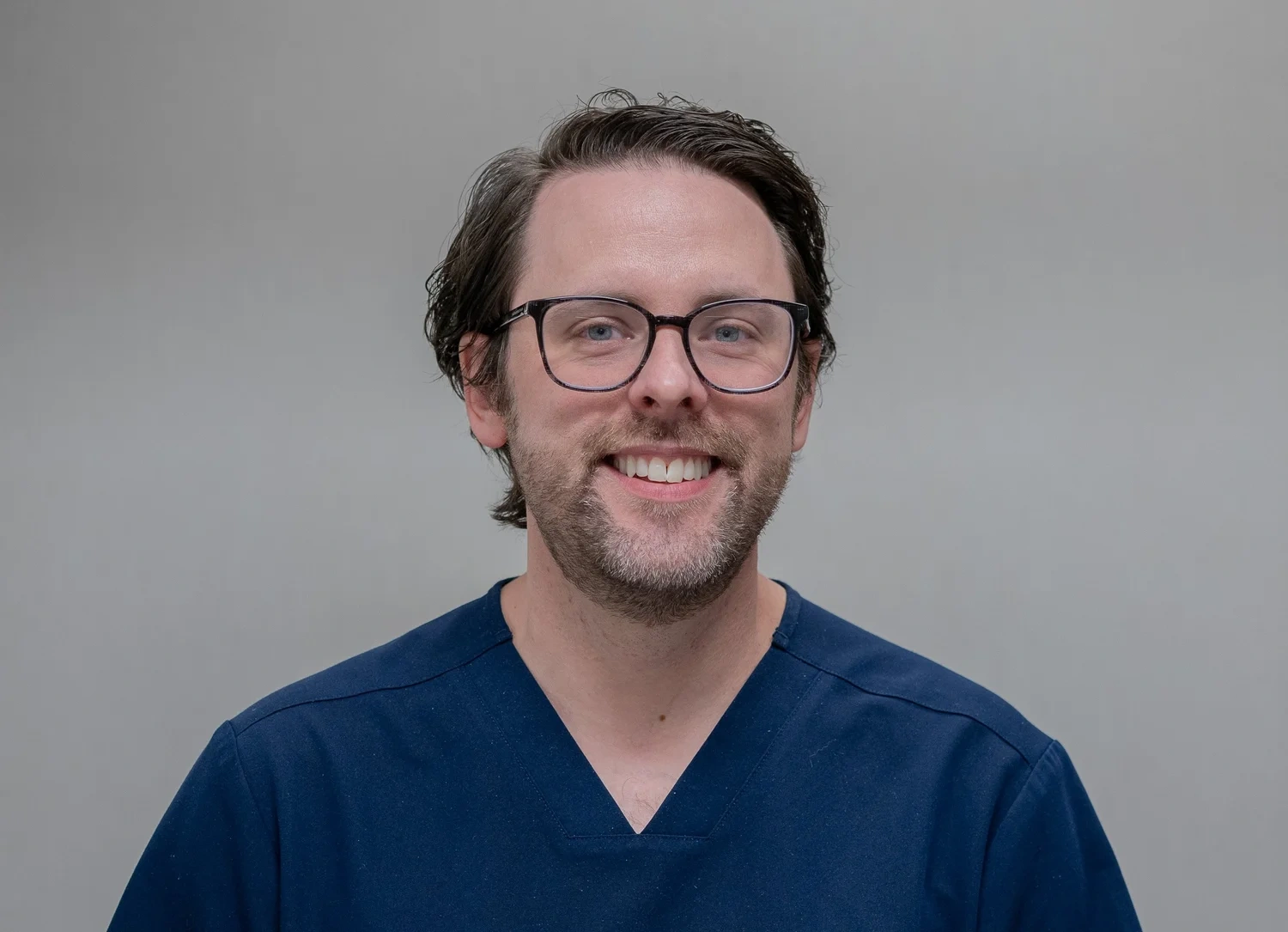
Topic: Collaborative care between physical therapy and PM&R physicians, PRP, the evolving landscape of MSK care
Guest Name: Dr. John Schmidt
Guest Credentials: MD
Discussion Details: In this episode of the Aureum Physio Spotlight Series, I sit down with John Schmidt, co-founder of Resolution Spine & Joint, to discuss the evolving landscape of spine, joint, and musculoskeletal care.
Dr. Schmidt shares his journey into Physical Medicine & Rehabilitation and Pain Medicine, the vision behind Resolution Spine & Joint, and his mission to help patients return to the activities they love without relying on surgery or long-term medication whenever possible.
Topics discussed include:
- The role of interventional spine and musculoskeletal medicine
- Common misconceptions about pain management
- PRP (Platelet-Rich Plasma) and regenerative medicine
- Who may benefit from minimally invasive treatment options
- When physical therapy, injections, and surgery each have a role
- Building a collaborative healthcare team for better patient outcomes
- The future of musculoskeletal and pain care
Benefits of Watching: At Aureum Physio, we believe the best patient outcomes happen when healthcare providers work together. This conversation highlights the value of collaboration between physical therapy and pain management specialists to help patients move better, recover faster, and stay active for the long term.
Address of Guest’s Business: 1505 SW Cary Parkway, Suite 201, Cary NC, 27511
Dr. Heather Smith: Everybody, I’m excited to welcome Dr. John Schmidt of Resolution Spine and Joint for the next in Aureum Physio spotlight series. Uh Dr. Schmidt is dual board certified in physical medicine and rehabilitation and pain medicine. He has nearly a decade of experience helping patients throughout the triangle overcome spine, joint, and musculoskeletal pain. He completed advanced fellowship training in interventional spine and musculoskeletal medicine at the Medical University of South Carolina in Charleston where he developed his expertise in precise minimally invasive procedures and regenerative regenerative treatments. Together with Dr. B, Dr. Schmidt is a co-founder of Resolution Spine and Joint with a mission to raise the standard of care for spine and joint conditions across the triangle. Thank you Dr. Schmidt for join us joining me today and taking time out of your busy schedule. I’m excited to dive into collaborative patient care and highlight the great work that Resolution Spine and Joint is doing in the triangle. I alluded a little bit to the background of your education and training, but why don’t you just give everybody a little bit more detail about your experience um going through your residency training and your fellowship and kind of what led you to being more interested in treating spine and joint uh pain conditions.
Dr. John Schmidt: Sure. Uh well, thanks for having me, Heather. And uh I’m excited to the interview, but my background is in physical medicine and rehabilitation, which a lot of people have never heard of. And so most specialties are focused by organ. So if you have a heart problem, you go to a heart, you know, cardiovascular doctor. If you have a liver problem, you go to a GI doctor. We’re unique in that we are really the function doctors. So as as rehabilitation physicians, we can treat literally any part of the body, head to toe, but we do that from a perspective of trying to help our patients with independence and quality of life uh and mobility, but as from a physician perspective rather than from a physical therapist or an occupational therapist perspective. And so what really drew me to rehabilitation was really the functional nature of it that we’re not necessarily trying to solve puzzles as one of my kind of mentors said. Uh I was for a while in between doing internal medicine and doing PMR and he said if you want to solve puzzles do internal medicine. if you want to solve problems, go to PMR. And that really spoke to me that, you know, we help patients walk further and get out of bed and get, you know, play golf, run around the floor with their grandkids, things that are important to them. And that really spoke to me. That’s what drew me to rehab medicine. Whether it’s somebody in their late 30s who’s just starting to get arthritis and can’t walk 18 holes like they used to, or whether that’s somebody, you know, after a brain injury or a spinal cord injury who’s trying to go back to work, or if that’s somebody on the other side of life in their 80s or 90s or above who’s just trying to stay in their home and maintain independence. Um, and that’s what drew me to PMR. When it comes to kind of the interventional part of it in spine, I think it’s much more hands-on approach than a lot of if you want to do pediatric rehab or spinal cord injury rehab or stroke rehab. You really spend a lot of your time in the hospital rounding, which wasn’t my favorite thing to do. And I liked uh the long-term relationships with my patients that we had cuz some people you see once or twice and they get better. Some people you see for the rest of their lives, but I like the outpatient side of it and I like that it was more kind of hands-on and procedural based rather than a lot of meetings and notes in the hospital. Uh, which is great. And so that’s what kind of drew me to to South Carolina for my fellowship and into our specialty that I do now.
Dr. Heather Smith: Awesome. And what was the vision really with your experience and working in different scenarios? What kind of was the culmination really between you and Dr. B to come together to start Resolution Spine and Joint. Um did you have any specific missions um that you were trying to accomplish or fill any gaps in the medical care that you were maybe seeing um in positions in the past that you were really trying to fill in and bring to the triangle to just be that you know preferred provider to help people get back to things that they wanted to do and in terms of improving their quality of life.
Dr. John Schmidt: Sure. And I think Dr. B and I were both in the area for several years and we both saw some gaps in the medical system where the the doctors were good but the infrastructure was frustrating and navigating that health care system was a challenge even for intelligent experienced patients. Uh and we thought we could do it better. Uh and so we kind of opened our own practice uh to start on our own.
Dr. Heather Smith: Awesome. And you me you alluded a little bit to like you know your preference was not necessarily in the hospital and rounding but you really value the patient care that you experience more in the you know office or clinic setting uh where you can either maintain a solid relationship with patients over a period of time or even those that you only see a few times and help them get better and move on. But how would you describe like your overall approach to patient care and pain management um in regards to you know patients that come in that maybe have never experienced or to your point have heard of you know physical medicine doctors like how do you educate them about yourself and where is your approach to you know kicking off with them and helping them on their journey towards you know pain management or painfree lifestyle.
Dr. John Schmidt: Sure. And so I think for me it really comes down to what their symptoms are and what the pain keeps them from doing. Uh you know there are people who are in severe pain and are laying in bed and you know my goal is not necessarily for them to be painfree but still laying in bed. It’s for them to be getting out and doing those things that are important to them which for most people it’s work, it’s time with their family and it’s some kind of recreational activity. Um, so I have a lot of patients that want to play with their kids or grandkids or, you know, run around with their kids soccer game and they have to carry, you know, four folding chairs and a cooler and uh, god knows what else you got to, you know, carry to these games and their, you know, their back or their knee or their hip makes it hard on them. You know, I have plenty of patients that that play sports of some kind that’s limiting. And so I think the first part of it is that interview in the the office visit to really dig down and figure out what’s really going on here. And I think that’s something that we really do a lot better than some other places is to really get to know the patient and figuring out what’s truly the issue. Uh because one of the things we saw with kind of other practices in the area is a lot of people kind of have an algorithm and you come out and you have sciatica. So you need an epidural injection and you need an anti-inflammatory and you need you know gabapentin and everybody gets the same exact thing and that’s you know those are reasonable treatment options but everybody doesn’t necessarily fit that mold. For example, you know, the person who has acute sciatica and literally can’t get out of bed and their wedding is in two weeks or their daughter’s wedding is in two weeks is not the same person as somebody who maybe has sciatica and the exact same medical diagnosis, but it really only bothers them when they play more than 18 holes of golf in a single day. And so, same medical diagnosis, same ICD10 code. if we have any other medical professionals following. But the way that you know I’m going to get those people better is a little bit different. And so, you know, somebody with kind of minor annoying symptoms, you can modify their activity. You could talk about bracing. You could talk about as needed medications or lidocaine patches. Uh if they’re going on a week-l long golf trip to St. Andrews, sure, you could talk about an epidural injection or a steroid pack before they go to get them through the trip. you know, if you’re and I’ve had this patient come in the office, if you’re getting married, you know, next weekend, you know, a week and a half away or your son or daughter’s getting married, we’re going to go kind of fullcourt press in terms of doing everything we can uh to get them through that that wedding and through that travel, but also try not to to knock them out where they don’t remember it. um because it it’s we can give people enough pain meds uh where they won’t be hurting but you know we also want to make them functional and so I think that balance is very important and it’s something that that we at Resolution Spine and Joint do very well.
Dr. Heather Smith: Yeah. And you know, I think sometimes like having the small or smaller offices, smaller practices can be a little bit more personal to patients and we are able often to spend more time in like every patient appointment that we have and have a little bit more personalized care. For those patients that you have that are not like a fullcourt press or, you know, might be playing the long game towards more pain management, how do you, you know, approach your way to keep them motivated? Because obviously with PT where we don’t have the access to being able to give like a quick turnaround to pain relief, trying to keep someone that’s having either chronic pain or pain that’s really inhibiting their quality of life stay positive and like move towards like a, you know, a better outcome. Like is there any way that you approach those patients that might have like chronic pain or just a really difficult diagnosis or situation to keep them staying on their plan of care, keep them on their trajectory that you want them to follow in terms of moving forward, staying active to get back to where they want to be or where they express their goals are without just, you know, kind of like giving up or throwing in the towel or becoming completely reliant upon like any sort of like medicinal al alternatives or anything like that.
Dr. John Schmidt: So we we certainly see a number of patients who get kind of frustrated and often lose hope. You know, some of our patients come to us after five or 10 years struggling with these issues and some of them have been to, you know, four or five other doctors. And you know, I’m not a miracle worker. I can’t, you know, lay my hands on somebody and and totally fix their back. But I think what we do is, you know, number one, kind of give them a reasonable expectation and a time frame of, you know, look, you’ve been dealing with this for 5 years. You’ve tried, you know, 20 different medications. Let’s take a look with fresh eyes and let’s talk about some newer options that that may not have been available even as recently as 5 years ago. you know, if there’s gaps in the things that they’ve tried, you know, let’s try things, but but also not overpromise because I don’t want to, you know, tell somebody on the first visit, hey, you’re going to be doing cartwheels on your way out of our office. Uh, and then they they maybe do get better, but they’re not as better as we led them to expect, and so they still come back frustrated. So, I think kind of setting reasonable expectations and really kind of understanding the patients reasonable goals. Uh, and if they’re not reasonable goals, kind of addressing that, which requires a certain level of of sensitivity.
Dr. Heather Smith: Sure.
Dr. John Schmidt: But, and some of our medications can take six or eight weeks to work. And so I think telling them that upfront of, hey, we’re going to start this medication, but it’s going to take you a month or two to see the full benefit helps them stay with it because it’s very different than, you know, something like ibuprofen or, you know, where you take it and an hour later, you know, often you’re seeing your result already.
Dr. Heather Smith: Right. Right. Well, that kind of almost what you mentioned leads a little transition maybe into something that I wanted to talk about as well is, you know, kind of regenerative type medicine. Most specifically PRP is that is probably the, you know, trigger word that I hear a lot like in my practice of patients asking me if I know what PRP is, should they use PRP, what is PRP, where can they use PRP, um, and other advanced procedures. So kind of if you can give us like a brief brief like kind of description of what exactly PRP is, what in your opinion are the best things that PRP can be used for and what like the ideal candidate for PRP is?
Dr. John Schmidt: Sure. And so PRP stands for platelet-rich plasma. And so anytime the body has an injury, whether you, you know, cut your finger cooking dinner tonight or, you know, have knee arthritis or kind of any other problem, your body has the ability to heal itself to a certain degree. You know, if you cut your leg off, you’re not regrowing another leg like a starfish. But, you know, within reason, you know, the body is capable of healing itself. And that occurs through kind of cellular signaling which is driven by kind of nerve input and through kind of healing factors in the blood. And so the full answer is is very complicated but the kind of highle overview is what PRP is is we draw the patient’s blood. We put an IV in. We draw out a small amount. We put it in a centriuge and spin it around and that separates out different parts of the blood. But that lets us concentrate these healing factors that are in the plasma or the pure liquid part of the blood. Uh and then we can inject that concentrated plasma with those healing factors into an area that’s injured to try and help it regenerate and heal. And it’s I would say it’s most effective for conditions like arthritis, tendinitis, uh things that are relatively early on in the disease process. So, somebody like uh you know 30 to 50 year old kind of weekend warrior athlete who kind of can’t quite keep up on the soccer field or the basketball court or the golf course kind of the way they could 10 years ago and is starting to get it. That person is probably the ideal candidate for PRP. Okay. where it’s not works great is the 85year-old person who has severe arthritis but maybe has other medical problems where they’re not a great candidate for something like a knee replacement. We have other options to treat that person but but PRP wouldn’t really make sense for them. It has been studied for some other conditions in the spine like disc wear and tear. But I would say the strongest research evidence is for kind of early structural injuries like joint arthritis, uh, tendonitis, things like that in patients primarily under 50 or 55. Okay. It’s safe to use in older folks and I I would have the conversation with anybody if they really wanted to try it. But most insuranceances don’t cover it outside of a few very narrow indications just because there are a lot of small research studies but there aren’t large research studies of hundreds of people. And so, you know, the way the insurancees work is insurance coverage is usually the last step in kind of getting new treatments widespread, right?
Dr. Heather Smith: Integration. Yeah. And like kind of to your point about some medications that take a while for it to set in and get the full effect. Do you have any reasonable expectations? I know sometimes it could be dependent upon like what exactly you’re treating, what the diagnosis is, but how long could people see a turnaround time and getting any sort of benefit if the benefit will occur with PRP?
Dr. John Schmidt: Sure. So the first thing I tell people is the pain is going to get worse uh initially and because PRP kind of stimulates the inflammatory process uh as kind of one of the steps in healing usually the first couple of days after the injection their pain’s going to get worse. Uh, and so I tell people that because otherwise, you know, they would be understandably upset if you go to the doctor because your knee’s hurting and, you know, I give you a shot and then two days later it’s worse. You know, if I didn’t tell you that, you’d be justifiably, you know, pissed off at me. So, I tell people, I was like, you’re going to hate me for a couple days.
Dr. Heather Smith: Uhhuh.
Dr. John Schmidt: But usually within, I would say, two to four weeks, we’ll start to see a significant improvement. It is a treatment that does require, you know, a little bit more time to work. And so it is something that, you know, the first couple weeks afterwards I will have people scale back their activity a little bit just because, you know, we don’t want to try to kind of rehab this joint and let it recover and then go, you know, run 10 miles and kind of irritate it. You know, scale back for for the short-term few weeks afterwards and then kind of let it do its thing and hopefully get back kind of into full activity and and better activity tolerance.
Dr. Heather Smith: And then how do you see that kind of integrating? Because I would say, you know, from like a PT standpoint, I’ve had different situations where I’ve had patients have PRP and their physician um has either been like, “Yeah, go on go back to PT and participate.” And I’ve had another situation where we’ve had like a twoe break in physical therapy. And of course, you know, I think some of it can scale to what level of intensity are we in like the rehab program and like what are we asking them to do or not asking them to do? And like obviously any plan of care should would be modified, but how do you approach kind of the interaction between PRP and something more like rehab versus obviously not having somebody go run 10 miles, but do like more of like a ongoing plan of care from a PT standpoint.
Dr. John Schmidt: Yeah. And so I think it really depends on what specifically you’re doing in therapy. And I think that’s one of the advantages that we at RSJ have is our background as rehab doctors. Like I, you know, when you send me the PT plans of care, I actually look at them uh and if there’s adjustments, I’ll make them whereas a lot of doctors just kind of blindly sign off. And so it’s not going to harm the patient to do whatever they want to do afterwards, but it might kind of limit the potential benefit of the PRP if they’re doing really aggressive things. So, somebody who uh you know was rehabbing uh like an ACL sprain, not a complete tear in physical therapy and doing like isometric knee exercises or things like that, totally fine. It’s not going to stress the knee that much. Somebody who might have, you know, another injury and for some reason was on a work hardening program where they’re really trying to test their endurance and their limits. I would probably say that, okay, if that’s what you’re doing in PT, something very aggressive where you’re lifting 50 pounds and, you know, doing 50 squats or, you know, to really test their limits, then I would say, okay, now’s the time where we need to to scale back. And that’s something that a lot of physicians, I think, are kind of hot or cold on or they don’t appreciate the nuance. So, and it’s easier to just say, sure, do whatever you want or take two weeks off PT. But I think what we lose for the patient is kind of the potential to maximize that benefit by, you know, doing as much kind of rehab as as they can and not delaying their their PT progress or their, you know, return to sport or whatever, but also, you know, not not putting them at risk of kind of getting a reduced benefit from the PRP. So, I think that’s really benefits from kind of communication between the physician and the physical therapist. And I think that’s something that that’s great about your practice, Heather, is, you know, it’s easy to reach out and get you. I hope it’s easy about our practice that it, you know, if you were another referring doc or physical therapist, uh, can reach out to me directly and get me and say, “Hey, I have a question about this patient. What would you like to do?” uh that I think is one of our strengths specifically in our practice but also a lot of smaller practices is that we are generally better at at communication and certainly accessibility of the doctor versus you know a big hospital-based practice or kind of private equity on where there’s kind of layers of bureaucracy that you have to go to to actually get a hold of the doctor.
Dr. Heather Smith: Yeah, and I would agree and I um do love that about uh RSJ is I to your point know that y’all are reading notes and want to have more information for any of our shared patients which is wonderful cuz it is tough from a PT standpoint when we have patients they go back and have their follow-ups with their physician and we send all the notes over and then the patient has you know kind of says like oh I don’t think that you know the physician even knows what I’m doing or what we’re doing in PT. So it can make that continuity of care and collaborative approach be a little bit more difficult when it seems like um not everybody is informed about the current state of the rehab phase. Uh so you know in addition to PRP I know there’s other regenerative type medicines. Um but is there anything you know in this coming of age of you know ongoing research and technology development of course like the hot topic these days is AI and how will AI AI change like patient care patient interaction you know treatment from things that you might be more excited about versus stressed about or worried about. Is there anything new kind of upcoming that y’all see on your end from either, you know, pain management standpoint, chronic pain, spinal pain, or joint pain that is not PRP, but is something that is showing promise for helping people out in terms of any of the conditions that they may be dealing with?
Dr. John Schmidt: So, I think there are a number of treatments that are available and they’re really limited more by insurance coverage honestly than by kind of medical research. uh and PRP is one of them where you know it’s it’s effective. It’s well studied for a handful of indications. It’s safe for a lot more. Uh but it’s it’s almost never covered by insurance. And so, you know, I think most practices charge kind of between $500 and $2,000 for PRP depending on kind of the practice and also where it goes. So, you know, if we’re injecting PRP, you know, right around somebody’s spinal cord, that’s a lot more risky and complicated and timeconuming than if we’re injecting PRP into the soft tissue for something like tennis elbow.
Dr. Heather Smith: Mhm.
Dr. John Schmidt: Uh but, you know, there’s a lot of people out there who would benefit from it who don’t have, you know, $1,000, you know, cash that they can kind of pay for these things. And so there are a number of other treatments available for, you know, spine and joint conditions, whether it’s, you know, for, we talked about kind of the middle-aged weekend warrior with knee pain. PRP is a great option. We talk about the, you know, 85year-old with a lot of chronic medical conditions that might limit their options for something like a knee replacement. you know, we have procedures where we can do kind of what’s called radio frequency ablation where we can deactivate the sensory nerve to the knee. And so for people with severe arthritis, it’s a great non-surgical option. Unfortunately, insurance, most of them don’t cover it. You know, there is a newer vascular embilization that’s been studied in the knee uh which looks very promising for patients with inflammatory conditions like rheumatoid arthritis. same thing. Insurance doesn’t cover it. And it’s, you know, it’s it’s part of the the life cycle of new medical treatments is usually there’s some limited research studies and then kind they’re sponsored by a drug company and then there’s kind of bigger research studies that are sponsored by, you know, grant money or, you know, f other federal funding. And then when there’s kind of enough studies that we’re all convinced that it’s relatively safe, eventually insurance will cover it. Um, but I think a lot of the things that I see on a daily basis are more limited by kind of cost and and insurance coverage than by you know technology available.
Dr. Heather Smith: Yeah. Um, what would you say though I guess with stuff that has been around for a while and from like the start of your career to now? Uh, is there anything that’s changed significantly in how you approach uh musculoskeletal pain or pain management? um anything that’s evolved significantly over the last few years?
Dr. John Schmidt: Yeah, I mean I think there’s in terms of diagnosis, you know, AI has been a huge thing that is really even within the last probably two years has changed and I think will continue to change over the next 5 to 10 years. You know, I’ve heard people say it’s going to be bigger than the internet was, you know, 20, 30 years ago. Um, and I think that’s probably the biggest thing that I have seen change and the biggest change that I would expect going forward. Uh, because we literally for I don’t know $25 a month, I think for chat GPT, it may be more or less for for other AI programs. We literally have the the knowledge of humanity at our fingertips, right? And readily accessible. But I think the challenge is implementing it. And I don’t know if you’ve used AI very much. I’ve used it, I would say a moderate amount. Uh, but it’s very good at accessing information, but it’s not very good at kind of teasing out what you really want. And it’s it’s not necessarily very good at kind of customer service. Uh, and and we have the option within our medical record software and our phones of having kind of an an AI answering service. And patients don’t like it. You know, they want a real person on the phone. And I think it’s going to emphasize kind of the doctor patient relationship or the physical therapist patient relationship or the, you know, nurse patient relationship in the future because I think, you know, people use Google search a lot more, maybe less in the last two years because they’re using AI now. But, you know, like when I first graduated med school and was in residency, I didn’t see a lot of Dr. Google stuff. you know, people would would come in and say, “This is what my problem is.” And you say, “Okay, we’re gonna run these tests. We have a diagnosis. We’re gonna treat you.” And they’d say, you know, “Okay.” Yeah. Or they might say, “Well, my sister had this problem. She had this treatment and it worked really well. What about that?” But, you know, I would say kind of once I finished training several years later, uh, up until probably a year or two ago when it shifted to AI, you know, people would say, “Well, I did a Google search and I found this. What about what about this? And a great example is with the ablations uh where we can do ablations for sensory nerves only. So areas like the knee, areas like joints in the back. We can’t do ablations for nerves that control muscles or else you’re going to have muscle weakness. And I’ve had a number more people than I can count over the years ask, well Google says an ablation can help my back pain. And for people with spinal stenosis or sciatica, you know, it could help your back pain, but it could also make your leg useless. So, not a safe treatment option for some things. And I think AI is getting better, you know, but I think, you know, we’ve seen a lot of insurance companies are offering tele medicine visits with sometimes it’s a doctor, sometimes it’s a nurse practitioner or a physician assistant or a physician associates. I think they changed the name now. You know, within the next 5 to 10 years, I think we’re going to see televisits with some kind of AI person, whether it’s a text chatbot, whether it’s, you know, they have AI actresses now. I think Tilly Norwood uh is her name, and they had some kind of music video that came out within the last year. I think we’re going to see AI physicians. Uh, and they’re going to be probably programmed to be excellent, you know, customer service people. If it’s like anything, uh, with chat GPT, it’ll give you exactly what you ask for, but it may not be what you really need. And so I think it underscores the importance of the kind of doctor patient relationship and the customer service that that we can provide because almost certainly it’ll be cheaper for somebody to see an AI kind of provider rather than a real life person. Uh but I’m confident that as a you know real life skilled physician that we can provide better care and certainly better customized care to an individual than at least today’s AI. Who knows 10 years from now.
Dr. Heather Smith: I would agree. I I’ve had several patients come in that have chat GPT or use their AI bot of choice with printed off their own exercise routine for whatever you know diagnosis they’ve been given. And then to that point, you know, they’re like, “Well, I’ve tried this and it either makes me feel worse or I don’t feel any different and I’ve been working on it for 2 weeks.” And I do think the real miss there is the AI is not taking into account different nuances that you can make to each exercise or how you program exactly, you know, how you’re putting them in. So, um I kind of have seen the same thing where either people have, you know, like either been coming in with their diagnosis before I even see them, if it’s like a direct access relationship or if they’ve seen a physician, been given a script with a certain diagnosis, then they’re bringing me in their PT exercises from the internet, which I think serves potentially a purpose, but it does, you know, it it highlights and underscores the misses that I’ve seen from that AI relationship for trying to create a a plan of care from a medical perspective, the nuanced uh components of patient personality, patient expectations, patient motivation that really um is highlighted when they do have that interpersonal relationship with either the PT and themselves and especially between the PT, the physician um and the whole team kind of all working together to get that patient better. Um looking ahead, um what do you what is overall goals for RSJ? um you’re what relatively a yearish in like how do you see like RSJ growing and serving a bit bigger impact on the triangle or you know the North Carolina state as a whole?
Dr. John Schmidt: Yeah, so we’re about seven months in actually and we’re already growing. I think what I have enjoyed the most in the past 7 months and what I look forward to the most is kind of the ownership that I get in terms of and autonomy that I get in terms of being able to kind of practice medicine on my own terms. Uh whereas anytime you have a boss that person can tell you what to do whether it’s uh you know five levels of your bureaucracy if you work at a big health care system or if it you know you work in a you know smaller private practice you may have only one or two layers of administrators but uh those people’s priorities generally is making as much money as possible and sometimes patient satisfaction scores uh metrics in terms of kind of things that on paper are supposed to be good but may not, you know, reflect the individual patients, you know, desire. I’ve never seen or heard any physician in any specialty say that they were graded on how well they got the patient back to activities that were important to them. It’s usually how much money are you bringing in, you know, what are your prescane or patient satisfaction scores? It’s, you know, how many nursing complaints have you had, uh, or not had, you know, how well do other staff like you? And those things are important, but I think and as as a private practice owner, they’re probably even more important to me now than they were then cuz as an employee, I got a paycheck and I got, you know, that worst case kind of my ears been about, you know, me taking too long in clinic some days. But, you know, as an owner, you know, if money is not coming in, staff are not getting paid. And so, I think it’s even those things are even more important now. But the difference is, you know, we have the flexibility to, you know, work somebody in when need be, even if the schedule’s already kind of full. You know, we have the flexibility to, you know, do, you know, charity care for somebody if we have to without going through kind of chains of bureaucracy. you know, we have the flexibility to, you know, adapt new technology quickly, uh, without having to go through, you know, three months of committee meetings and overviews and things like that. And I think that’s what I’m the most excited about is kind of the the adaptability going forward of kind of letting RSJ evolve kind of to meet the needs of our area.
Dr. Heather Smith: Awesome. And what would you say is the most rewarding part of your job?
Dr. John Schmidt: Seeing patients get better uh, and get back to activities that they enjoy. So, you know, I had a patient this week that just came back from uh their child’s wedding, which was out of town, and they were really nervous about it, and they said, “You know what, Doc?” Like, I wasn’t perfect, but I was able to get through it and enjoy it and, you know, dance with my daughter on her wedding day. And that made all the difference. And so, that type of thing is what really uh gives me the most joy in my practice is
Dr. Heather Smith: awesome. That’s wonderful. And just give us kind of like a typical day in your life. Well, what do you like to do either like outside of the office or family life?
Dr. John Schmidt: Sure. So, uh I have a 10-month old almost 11month old at home. So, he consumes most of my free time with diaper changes and feeds and playing. Uh he likes to his name’s AJ and we joke that it’s AJZilla. We put him on my shoulders and ride around and make dinosaur noises. Uh and he loves it. Uh but yeah, you know, so that is for those of you at home that have kids, you know, uh a lot of work, but uh you know, you got a business baby and a real baby.
Dr. Heather Smith: That’s right.
Dr. John Schmidt: Um and and so the you know, my available free time has gone down a lot in the last year, but you know, I do a lot of DIY stuff around the house. Right now we’re in the baby proofing phase where uh we’re getting up all the, you know, baby gates and stuff that we didn’t need, but he’s about to start walking, so he’s a lot more mobile. Um, you know, I like to to ski and play golf and and scuba dive when time allows. So, uh, we went on our first uh airplane trip with a baby recently, and I can tell you it’s a lot more work. Uh, but it’s it’s fun. And so we got a thankfully a full life outside of work as well as a a full life kind of getting RSJ set up here.
Dr. Heather Smith: That’s amazing. Um, anything about RSJ that we haven’t covered or that you would like any potential patients or referral partners to know?
Dr. John Schmidt: Yeah, I think you know we’ve covered the basics, but we really are pretty full scope uh in terms of anything that doesn’t need an operating room. if it’s, you know, bothering you and kind of limiting activities that you enjoy, we’re happy to see you. We don’t treat everything. And so sometimes we have patients that come in and we kind of look at them and do a workup and realize it’s not really a a spine or a joint problem. You know, for example, uh we had one patient that that had an inflammatory disease that needed a rheumatologist or, you know, if they have a an underlying, you know, neurologic condition that we can’t treat, uh, you know, we’ll we can pass them along to kind of the next person, if it’s either something that we can diagnose but but can’t treat, or if it’s something that, you know, we’re stumped, but we need to kind of send you to somebody with a little different expertise, we can do that. But, you know, we’re happy to see, you know, whoever. I think the one thing that we really don’t treat is people with kind of pain medicine addiction just cuz as a small clinic, we don’t have the resources to really treat those people. Uh, they really need a team approach with, you know, a physician prescribing medications and a psych, you know, psychologist and a whole kind of team of folks. But, you know, most other things, uh, and even, you know, if somebody has addiction issues, we can see them, but pretty quickly, we’re going to kind of get them into somebody that can really help them.
Dr. Heather Smith: Perfect. Um, and then we’re almost perfectly on time or out of time, I guess I’ll say, but, uh, would you say you are more of a coffee or a tea person?
Dr. John Schmidt: I, well, since the baby, I’m definitely more of a coffee person. Uh, I think I’ve had more coffee in the past 10 months than I did, uh, the whole life prior.
Dr. Heather Smith: And then on that note, how do you take your coffee?
Dr. John Schmidt: Uh with enough uh sugar that it doesn’t taste like coffee and a little bit of cream, sugar water with a little caffeine. I didn’t grow up drinking coffee, so I got to put enough uh stuff in there that it only barely tastes like coffee.
Dr. Heather Smith: Masks the taste.
Dr. John Schmidt: Yep.
Dr. Heather Smith: Well, Dr. Schmidt, thank you so much again for joining me today. I know it asks a lot to take 45 minutes out of your schedule when there’s a lot of I know like charting clinical care, good patient care and teamwork that you go through dayto-day. Um I appreciate your insights, your education to me, education to everybody listening and watching this. Um and then also just your commitment to helping our patients in the triangle get better and move towards a collaborative approach. Um, if people want to learn more about Resolution Spine and Joint, is it best to just send them to your website and they can get connected through um your office line?
Dr. John Schmidt: Yeah. So, uh, if they want to visit, they can call. We’re, I think, in the process of, you know, figuring out how to make kind of people be able to self- schedule online without it being total chaos. Uh but we can certainly, you know, if they want to just learn about us, the website’s great. To my knowledge, we’re the only, you know, Resolution Spine related people in the area. I think there’s there’s like a resolution chiropractor in Arizona or Utah somewhere, but we’re the only one, you know, in North Carolina that I was able to find. So, if you just search for, you know, resolution spine, you should find us. And uh yeah, we’re happy to to see whoever. It’s it’s pretty easy to get in and we take almost every major insurance now.
Dr. Heather Smith: Okay. Okay, awesome. Well, thank you so much. All right, well that’s everything. Thank you so much for your time. I really, really appreciate it.
Dr. John Schmidt: All right. Thanks, Heather.