
Aureum Physio
Interview with Dr. Abby DeVries
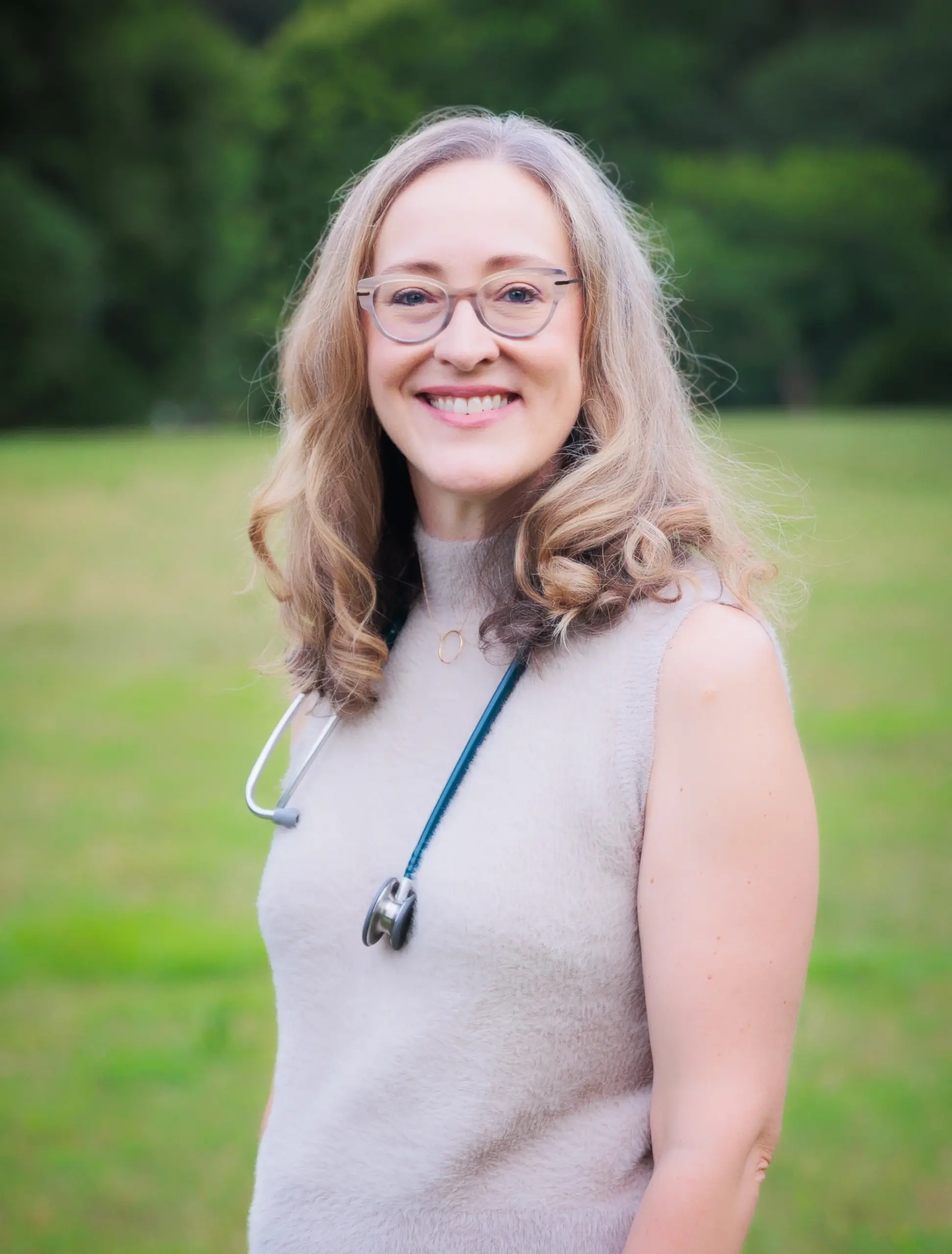
Guest Name: Dr. Abby DeVries
Guest Credentials: MD
Discussion Details: In this episode of the Aureum Physio Spotlight Series, Dr. Heather Smith sits down with Dr. Abby DeVries, MD, founder of Sabia Health NC, to explore the powerful connection between perimenopause, menopause, and musculoskeletal health.
Their conversation highlights how hormonal changes during midlife can influence joint pain, tendon health, muscle mass, injury risk, recovery, and overall physical performance. Dr. DeVries shares insights from her work in women’s health and concierge medicine, helping to clarify what many women experience but are rarely educated about.
Together, they discuss:
- What defines perimenopause and menopause
- Why new aches, stiffness, or injuries often emerge during this phase of life
- The role hormones play in collagen, muscle strength, and recovery
- The importance of strength training and intentional movement
- How collaborative care between physicians and physical therapy supports long-term health
Benefits of Watching: Many active women are surprised when their bodies begin to feel different in their late 30s, 40s, or 50s. Pain that doesn’t resolve, recurring tendon injuries, slower recovery, and unexplained stiffness are often attributed to “aging” — when in reality, hormonal transitions play a major role.
This conversation provides clarity, reassurance, and practical guidance from two clinicians who regularly help women navigate these changes.
By watching, you’ll gain:
A better understanding of what is happening inside your body
Insight into why certain injuries or pain patterns appear in midlife
Evidence-based strategies to stay strong, active, and resilient
Perspective on how medical care and physical therapy can work together to support long-term wellness
Address of Guest’s Business: 5826 Fayetteville Road, Suite 201, Durham, NC 27713
So, welcome to RM Physio Spotlight Series where we connect with exceptional professionals who are elevating the way that we care for our body as a whole. Today, I’m honored to jo to be joined by Dr. Abby DeVries, a physician spec specializing in women’s health and menopause care. She is the founder of Sabia Healthn NC, a direct primary care practice dedicated to personalized relation relationship-driven medicine primarily focusing on women in midlife and helping them negotiate the changes occurring with menopause support, hormone therapy, preventative wellness, and chronic condition management. We’re diving into an incredibly important and often overlooked topic. how pmenopause and menopause influence muscularkeeletal health, pain, performance, and recovery. Dr. Dere, thank you so much for being here. To let RM physio’s audience get to know you a little bit better, I would love for you to tell us a little bit about your background and what inspired you to open Savia Health.
Dr. Abby DeVries:
Sure. Well, it’s a pleasure to be here today. Um, I’m a family physician. I’ve been practicing for a little over 20 years and have worked in a variety of different spaces in the healthcare system. and last year made the jump to the direct primary care model which allows me to have much more time with patients to not have to worry about insurance coverage for the the time that I’m spending so that I can really provide very personalized care. And as I’ve sort of aged um into this period of of life, I’ve also become very passionate about helping women um to stay healthy and to age well and also to really feel good in this phase of life when you know it’s it can be a chaotic phase where they are you know dealing with with children who are still at home and maybe aging parents in the peak of their career um and want to have some time for themselves as well. So to really make sure they feel good. Um, and then also, you know, this is a transition to a time when when eventually people start to develop some chronic medical conditions. So, really making sure that they’re being screened for things and that they know how to really take care of themselves the best way possible.
Dr. Heather Smith:
Awesome. Um, you know, kind of on that note that, you know, leading you to open Sabia Health, did you see any like specific or what would you say are like the bigger gaps in traditional health care for women in midlife that you feel like the direct primary care model in Sabia Health as a whole is really good at identifying and filling in the gaps there that traditionally are often overloo overlooked or missed.
Dr. Abby DeVries:
Yeah. So, I think you know hormone replacement therapy is one of them. I mean, we’re undergoing a really huge shift in medicine right now where people are are kind of coming back to prescribing and in an evidence-based way. Um, but it takes a conversation to kind of go through the risk and benefits for patients and then figure out what formulation you want to start with and then you have to kind of tinker with the doses. So, it’s something that’s very hard to do in a 15-minute office visit. Um, and then you also need some of that follow-up. So, as part of my membership, any kind of communication about symptoms and things like that is all covered. And so people feel like they have this kind of direct line to be able to to get to a dose that works for them for now and then it may change again in the future. So hormone replacement therapy for sure. And then you know pelvic health is is another thing that even if people are seeing a gyn, they’re not always being asked about pain with sex, urinary incontinence, um things that really affect their quality of life. And so I have time to to ask questions, do an exam, think about other partners to pull in um to make sure that they’re, you know, being effectively treated for that as well.
Dr. Heather Smith:
Awesome. And I think you know we all know especially women and women in health care but um I think you know a broader sense there’s a lot of misconceptions or unknowns that people have about like when does pmenopause typically begin? Um how would you define pmenopause and p menopause clinically? What’s the typical age range? And what are some misconceptions that you often deal with?
Dr. Abby DeVries:
Yeah. So menopause is one day um the when you’ve been 12 months without a period. The average age for that in the US is is age 52. And then per menopause is the the phase kind of leading up to that which can be up to 10 years. So if you think the average age is 52, I have women who are already postmenopausal at 45. If they had symptoms for up to 10 years, that’s actually late 30s. So there’s there’s really no kind of too early um to start having symptoms um related to to permenopause. Um and early menopause would be before 45. premature ovarian failure um would or insufficiency is before 40 when there’s significant risk factors for cardiac disease and osteoporosis. So if someone’s already hit menopause at 40 that’s a different um kind of intervention. Um but really anybody late 30s who’s experiencing some symptoms that are a change from their baseline that could absolutely be permenopause. And then postmenopause we typically just say menopause but it’s it’s really like the that phase past the 12 months.
Dr. Heather Smith:
And then what do you think are those symptoms that are often miss or missed or a misdiagnosed?
Dr. Abby DeVries:
Yeah. So I mean the most common is sort of your typical hot flashes, feeling just hot overall, sleeping more poorly, brain fog, joint pains, um vaginal dryness, decreased libido, all of that um can start even if you’re still having very regular periods. And then in the permenopause phase, you also can start having changes in your period where they’re, you know, more erratic, heavier, um, and with associated with more pain. You know, oftentimes women will need to go on, um, medication for birth control in their 40s just to control their periods because they’re actually having, you know, anemia. Um, so, so the period irregularity and then obviously eventually the period goes away. Um, and then the thing that we don’t see that is asymptomatic is the decrease in bone mass. And that starts in the late pmenopause phase in the year or two leading up to menopause. And and that’s something that um, you know, once you can rebuild bone, but it’s a lot harder. It’s easier to maintain bone. So that’s something that um, I think about as well for women.
Dr. Heather Smith:
Yeah. And that kind of leads directly into kind of like what I wanted to, you know, really kind of talk about like obviously in the physical therapy world, we deal, you know, primarily with the symptoms that would be related to muscularkeeletal issues, primarily the bone loss. Um, we do often get referrals to PT um, for patients with either osteopenia or osteoporosis to try to do exercise-based intervention with resistance training and to really help guide the patients into a more especially those that might not be as familiar with strength training to guide them into a very um, you know, intentional progressive resistance-based program that is going to be safe and effective for them to do. Um so you know that loss of bone I think is uh probably the most common muscularkeeletal change that the general population does associate with pmenopause and the menopause changes. Um but you know needing um a more global viewpoint of like the other changes that are occurring with the loss of estrogen. We know that estrogen plays a big role in collagen um development and as the estrogen levels lower the types of collagen may decrease as well that can lead to tendon stiffness and degradation of articular cartilage. Um how do you think that physicians responsible for women’s health can help manage and work better together with physical therapists and then also physical therapists can work better with physicians in terms of women’s health. Um, you know, I think that from an educational standpoint for PTs, and this is not speaking for every um, PT, but we are often educated towards red and yellow flags to know when referrals out or, you know, something of importance in terms of, you know, severity of condition. But you know I think there’s a lack of knowledge of how can PTs identify a female patient that might be in these stages of you know hormone levels changing that’s contributing to glutial tendinopathy frozen shoulder XYZ. um you know where do you think kind of a good position for physicians to refer to PT but then also PTs to have that identification that maybe something else needs to be done so we don’t feel like we’re running on a hamster wheel of trying to program these you know rehab programs for our patients like how do you kind of see how we can work better together as a more holistic team.
Dr. Abby DeVries:
Yeah. Well, the first thing that comes to mind is is frozen shoulder, which is a classic kind of permenopause. As your estrogen levels drop, very commonly people will have the adhesive capsulitis in the shoulder. Um because estrogen is anti-inflammatory um and not to mention the the collagen um production. So people um if especially if they are not super active, but even active people, it can can freeze up very quickly. Um, so that would be your number one like a PT identifying that in a woman in her 40s like you know consider HRT uh along with all the therapy that you would do. Um, and then there so that’s the main like really um kind of dramatic thing. The other is more just kind of general aches and pains. A lot of times people will complain of hip pain especially if it’s bilateral. I feel like it’s less likely to be something bioch biochem biomechanical and and probably um more likely linked to the estrogen. So women who will say their hip pain goes away once they get on estrogen. Um and then I think other joints as well, but I think that the hips seem to be pretty common. Um and then just overall kind of fatigue and and not not feeling like they have the energy to be mobile. um and so developing some some symptoms of kind of just a sedentary lifestyle. And so if people are telling you they don’t don’t feel like they have the energy to even you know do their exercises or they can’t sleep um that that would be another big thing that I’m I’m sure comes up when when people are in your exam room.
Dr. Heather Smith:
Um, so you know, if those folks come in and, you know, we’re going about like the therapy interventions and I do think that, you know, a referral to a a physician if they haven’t already started to explore HRT or hormone imbalances, how can we best have that conversation as a physical therapist with the patient when we’re obviously not the experts, but kind of give them a little bit of like a baseline support to encourage them to go seek that care from you um, with Sabia. health and not um you know send them spiraling.
Dr. Abby DeVries:
Yeah. Yeah. I think um the just you kind of bringing up that like you know this you know as your body changes as you enter midlife this is something that you see commonly um and that um the the guidance is changing around kind of the the risks of hormone therapy and the benefits and it it would not be it would be something that would be a good idea to bring up with your provider. And I usually tell people like if you have a primary care provider or you have a gyn start there. The again the traditional medical field is evolving rapidly to to and and then there’s people who were prescribing before the big study in 2001 who’ve kept prescribing. So you if you’re lucky you have a provider that would conversation and the risk benefit analysis with you and talk about it. Um but then if not you know seeking out someone who’s a menopause specialist and menopause.org or has a list of providers who are certified as uh menopause practitioners. I’m on that list and there’s several in the triangle as well. Um so I think it’s more just uh like you know you don’t have to keep suffering. I think women have really kind of learned you know over the centuries that like this is their fate. They just have to to deal with it. But I think just you know coaching people that you know there might be something more we could do about this and it’s worth exploring. I would.
Dr. Heather Smith:
So, kind of on that note too for people that might not know too much about like hormone replacement therapy or even what sort of like medicinal treatments are available to them in this like life change. Um, can you clear up a little bit, you know, about the confusion over hormone replacement therapy? You know, how do you help patients decide what’s best for them? Who’s a good candidate? Um, and what are like some safety myths and concerns that you often deal with?
Dr. Abby DeVries:
Yeah. So, I could talk for about an hour on this, so I’ll try to hit the highlight. So the big thing is that in 2001 there was a study that was it was it had been going on for several years but the news came out in 2001 the headline was that hormones cause breast cancer. So in the first place that was not actually what the data showed but it was then basically people stopped hormones overnight. I was in medical school then didn’t really learn how to to manage hormones. Um the bottom line is that that’s not what that study showed. Uh and then we have new data showing still showing that that’s not the case. Um, estrogen alone actually has a lower risk of breast cancer. Um, and it was a synthetic progesterone that we don’t use anymore that was most likely contributing to the increased risk of breast cancer. And in the women who got breast cancer diagnoses, they were still less likely to die than women who were not on HRT. So, so the breast cancer thing, you know, there’s considerations if you have a history of breast cancer or very high risk that certainly you want to have that conversation. um we worried about blood clots and stroke and cardiovascular disease. We now use a transdermal preparation almost exclusively although we still do sometimes use oral and that with that is much and like I mentioned we now use um biioidentical progesterone rather than the synthetic. So we’re using safer medications and even with the old medications that we used there was still major benefit for bones for symptom management um and you know not such a bad risk profile for the cardiovascular disease and the breast cancer that we were kind of told in the media. Um so I kind of go through that with patients and number one is like let’s treat your symptoms. Let’s help you feel good now because it’s very clear that nothing is going to be more effective than estrogen to treat this loss of estrogen. So there’s no herbs there are much less safe because you know they’re not regulated in the same way. So the medications that I prescribe almost exclusively are FDA approved. They’re regulated very heavily. You know what you’re getting. They’re bio identical. I will occasionally do some compounded things if needed. But you’re you’re you’re safe going with the things that are regulated and and the best studied. Um and so I um and then there’s bone the bone health part of it. I think we are headed towards an epidemic of osteoporosis that we are not prepared for um because we don’t screen typically till people are 65 and then it’s too late. So I I’m a big proponent of getting a DEXA as you’re hitting menopause so you know what your baseline is and then considering hormones both for symptoms and prevention of of osteoporosis for which it’s it’s got that indication with the FDA. So that’s a couple of the highlights. Anything you wanted me to hit on that I didn’t talk about?
Dr. Heather Smith:
No, I think that’s great. Do you ever have any non hormonal options for any patients that might have a history of breast cancer that might not be candidates for HRT team?
Dr. Abby DeVries:
Yeah, there are a few. There’s some medications that are um mostly they’re off label, depression medications. There’s a um medication we use often for pain. Um and then there are some um they’re called selective estrogen receptor modulators that we can use that um actually um the breast receptors do not respond to it. And so sometimes people can use those. Um in my practice almost everyone’s coming to me because I’m prescribing hormones, but there are options. Um and the the bone there are things for bone as well. Um specifically if people have osteoporosis and vitamin D, calcium, strength training, can’t emphasize that enough. You need to do that even if you’re taking hormones.
Dr. Heather Smith:
Yeah. Um, so if a woman, you know, in her late 30s or 40s or 50s is starting to notice like have that suspicion that changes are starting to occur, what would you say like the first three steps for someone to do um to help prepare themselves as best as possible to your point, not to let time go by where you almost get behind the curve, but try to stay on top of it.
Dr. Abby DeVries:
Yeah. So, first thing I would say is is to educate themselves to the degree they have interest. So there’s a couple of you they really become sort of influencers but they’re physicians first and they’re they’re very evidence-based. So Mary Cla Haver is OBGYn. She has a book, a podcast. Um so depending how people like to get their information. Kelly Caspersonson is a urologist. Um and she also has a book and a podcast. And then Rachel Rubin um is more on social media. I don’t think she’s written a book, but she’s been on other people’s podcasts. And so just kind of educating yourself on the the most up-to-date data and then making an appointment with your usual source of care and starting there and and and make it an appointment specifically for HRT discussion because if you try to do it during your physical the physician’s not going to have time. Um and and so that that would be the first two things. And then if you don’t get feel like you get the right answers or enough time, then look for one of these places that are specializing in menopause care and can have that very nuanced conversation and spend the time with you to help you make the right decision.
Dr. Heather Smith:
Um, and then for folks that, you know, might want to seek out someone such as yourself that really, you know, um, emphasizes your knowledge and expertise in menopause care, but maybe they want to start with you before going to just a general primary care. Is that an avenue for folks to come see you before maybe these changes occur?
Dr. Abby DeVries:
Yeah. So, I I think I’m I’m um my I’m really there’s so many women who are already in the space who are underserved that I’m really trying to provide that service, but I also love talking to women who are, you know, still probably premenopausal about how they can make sure that they’re optimize their nutrition and their strength training and that we’ve screened them for things. So, it’s never too early to sort of start thinking about, you know, how to stay healthy. Um and so I I do individual visits um specifically around menopause. Um but then what I really love doing is taking care of the whole person. So, I’m hoping to build that practice. But there are again several really excellent some long-standing clinicians in the Triangle area that that do menopause all day long and are very knowledgeable.
Dr. Heather Smith:
Amazing. And Dr. Dere, um this has been such a great and empowering conversation. And if um folks do want to seek out your care and rely on your expertise and helping them navigate age related changes or even just looking for an awesome provider to take care of them as a whole, what is the best way for someone to find you or get in touch with you or um you know get get uh set up with uh working with you?
Dr. Abby DeVries:
Yeah. So you can schedule directly on my website. It’s um Sabia Health sabia aalthnc.com and I also offer a free 30-minute consultation. So if people just want to kind of you know figure out whether we might be a good match, they can do that or they can join or they can schedule a one-off visit. And so that’s on the website. I’m also on Instagram at Sabia Healthnc. And so I post um a lot of health related information there if people want to kind of just see what my overall philosophy is. Um and those are those are the two best ways to to find me.
Dr. Heather Smith:
Amazing. Um well, thank you again for joining us on this edition of RM Physio Spotlight Series. Um where clinical excellence meets whole person wellness. If you’re navigating pmenopause, menopause or new muscularkeeletal pain, um know that you don’t have to do it alone. Uh RM physio is definitely here for your muscularkeeletal issues and Sabia Health is here to help you navigate any sort of health or age related changes, especially for women’s well wellness. Um we’re here to support you every step of the way. Please reach out to RM Physio or Sabia Health for any of your needs. Thank you again Dr. Dere for being here and we look forward to working with you in the future.
Dr. Abby DeVries:
Oh, thank you so much.