“Scar tissue” gets blamed for a lot. Lingering pain after surgery. Stiffness that doesn’t resolve. A joint that never quite feels right again. For many patients, scar tissue becomes the explanation for everything that didn’t fully heal - a catch-all that sounds clinical but is rarely explained well.
The reality is more nuanced, more interesting, and more treatable than the vague story most people have been told.
What Scar Tissue Actually Is
When tissue is damaged - whether through injury, surgery, or repetitive overload - the body repairs it through a process of inflammation, proliferation, and remodeling. The new tissue laid down during that repair process is scar tissue, also called fibrotic tissue.
Scar tissue is not inferior tissue, exactly. It serves its purpose; it closes the wound, restores structural continuity, and allows the body to keep functioning. But it is different from the tissue it replaces. Whereas healthy muscle, tendon, and ligament are composed of collagen fibers organized in alignment with the forces they need to bear, scar tissue is laid down more haphazardly - a denser, less organized matrix that is less elastic and less adaptable to load.
In the skin, this produces the visible, raised, sometimes discolored scars most people are familiar with. In deeper structures like muscles, tendons, and joint capsules, it produces internal changes that affect movement and function in ways that aren’t visible but are very much felt.
What Scar Tissue Isn’t
Scar tissue is frequently described in ways that overstate its permanence and understate its responsiveness to treatment. A few misconceptions worth correcting:
It is not immovable. Scar tissue, like all connective tissue, responds to mechanical stimulus. It can be remodeled, reorganized, and made more functional through appropriate loading and movement. The idea that scar tissue is fixed and permanent is simply not accurate.
It is not always the cause of pain. Pain after injury or surgery involves the nervous system as much as the tissue itself. Persistent pain in a healed area is often driven by sensitization of the nervous system rather than ongoing structural damage from scar tissue. Attributing all post-injury pain to scar tissue conflates two different problems with very different solutions.
Adhesions are not always pathological. Scar tissue can create adhesions - areas where adjacent tissue layers that should glide over each other become stuck together. This is a real phenomenon, particularly after surgery. But not all adhesions cause symptoms, and not all symptoms attributed to adhesions are actually caused by them.
The Remodeling Window
One of the most clinically important facts about scar tissue is that its properties are not fixed at the point of healing. The remodeling phase of tissue repair, during which the collagen laid down in the proliferative phase is reorganized and refined, lasts significantly longer than most people assume.
For skin wounds, remodeling is largely complete within six to twelve months. For deeper structures like tendons and ligaments, remodeling continues for up to two years. During this window, the tissue is genuinely responsive to mechanical input - the direction, magnitude, and frequency of loading influence how the collagen organizes itself.
This is why rehabilitation timing matters. Early, appropriate loading during the remodeling phase produces better-organized scar tissue than immobilization or complete rest. Movement is not just permitted during healing - it is an active ingredient in producing better tissue quality.
What PT Actually Does About Scar Tissue
Physical therapy addresses scar tissue through several mechanisms, and the approach depends on where the scar tissue is, how old it is, and what functional problems it’s creating.
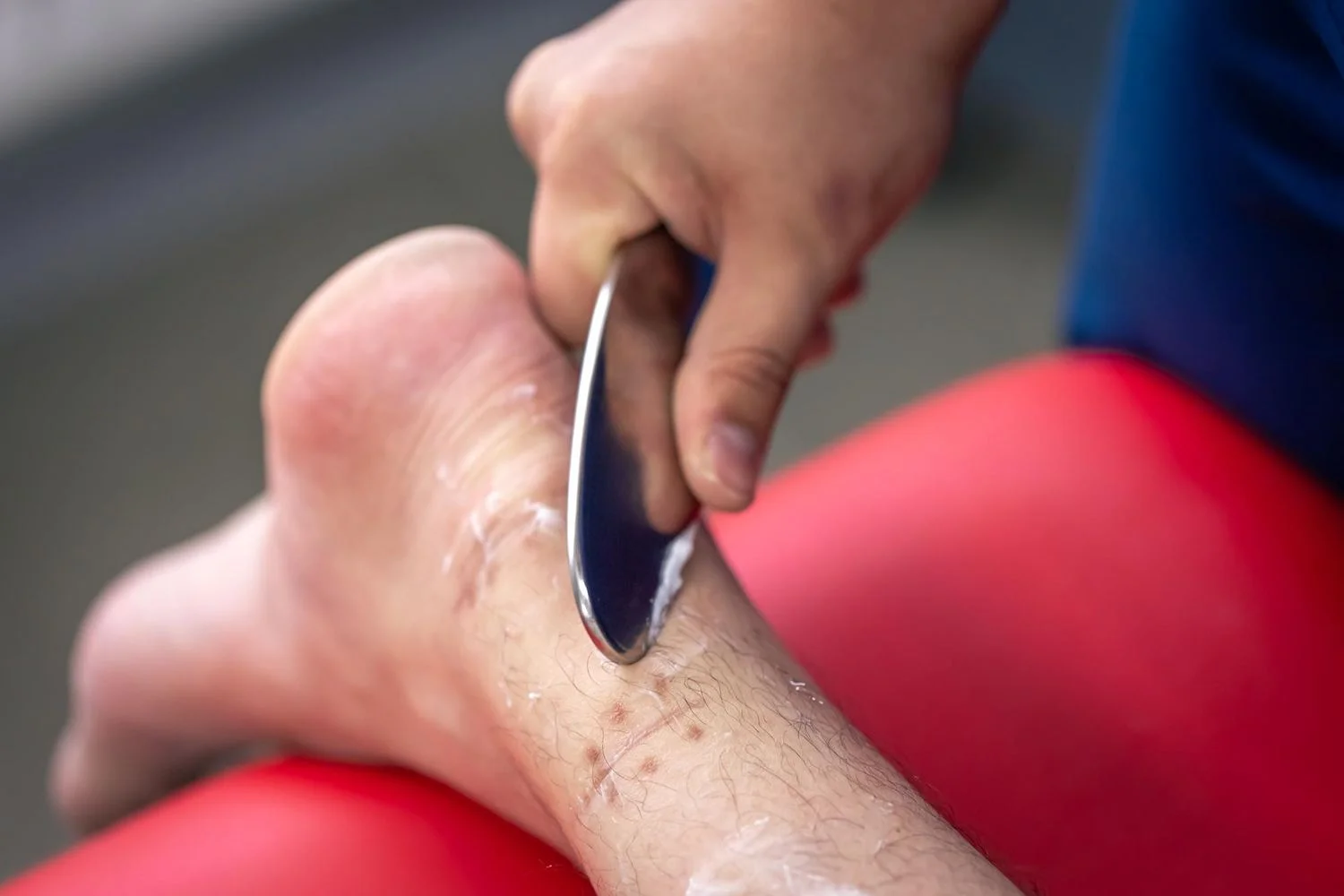
Manual therapy - including soft tissue mobilization, instrument-assisted techniques, and myofascial approaches - works on the mechanical properties of scar tissue and the adjacent structures. The goal is not to “break down” scar tissue in the way the phrase is often used colloquially, but to improve tissue mobility, reduce adhesions between tissue layers, and restore the capacity for normal movement.
Progressive loading drives the remodeling process. Appropriate mechanical stimulus signals the body to reorganize collagen fibers in alignment with the forces being applied. This is the most evidence-supported way to improve the functional quality of scar tissue over time.
Scar mobilization for post-surgical or post-traumatic skin scars involves direct manual work on the scar itself, beginning once the wound is fully closed. Scars that are not mobilized can become adherent to underlying structures, restricting movement and creating pulling sensations. Early, consistent scar mobilization significantly reduces these outcomes.
Desensitization addresses the nervous system component of scar-related pain. In areas of significant scarring, the local nerve endings may be hypersensitive - responding to normal touch or movement with pain. Graded desensitization work retrains the nervous system’s response to input in the scarred area.
When to Address It
The most common mistake with scar tissue is waiting too long. The remodeling window is finite, and tissue that has been immobile and unstimulated for years is harder to work with than tissue addressed during or shortly after the healing phase.
If you have a post-surgical or post-injury area that feels restricted, tight, or painful - whether it’s recent or years old - it is worth having it assessed. Older scars are less responsive than newer ones, but they are not unresponsive. We regularly see meaningful improvements in mobility and pain in patients who assumed their scar tissue was simply something to live with.
At Aureum Physio, scar tissue assessment and treatment is part of how we approach post-surgical and post-injury rehabilitation. For patients who feel like they plateaued in their recovery without fully getting there, the scar tissue picture is one of the first things we evaluate.
If you have an area that never fully felt right after an injury or surgery, it’s worth getting a proper look. There may be more that can be done than you’ve been led to believe.